Hypothetical Film Festival #3 – No Capes Comic Book Films

The super hero movie is valuable stock in Hollywood these days. From Batman to Iron Man to Spider-Man and the X-Men, every superpowered being in print is fodder for the next big budget blockbuster. On the flipside, existing parallel to the Big Two (DC and Marvel), has been an independent and creator driven comics industry. Out of this alternative has come unique and quirky stories that use the sequential art medium to tell stories off the beaten path. Here’s a few that would make for a dynamic and engaging film festival.


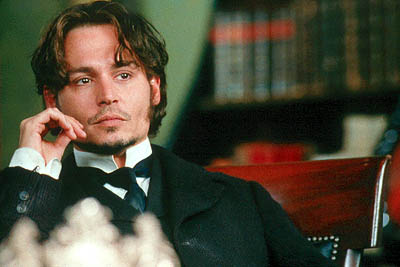
From Hell (2001, dir. The Hughes Brothers)

While I am no big fan of this adaptation of Alan Moore and Eddie Campbell’s graphic novel, it is still decent film even though it loses the essence of the original work. The story follows British Inspector Frederick Abberline (Johnny Depp) who has been brought onto the Jack the Ripper case. He befriends East End prostitute Mary Kelly (Heather Graham), whose friends are being picked off one by one. The mystery unfolds as part of a dark Illuminati conspiracy and the Ripper’s motives are attached to satanic machinations. The Hughes Brothers, best known for their contributions to African-American cinema with Menace II Society, Dead Presidents, and the wonderful documentary American Pimp, devise a few clever visual tricks but nothing that can raise the film too far beyond a mediocre level. The best part of the film are those metaphysical and occult concepts of Moore’s that made their way from the page to the screen.

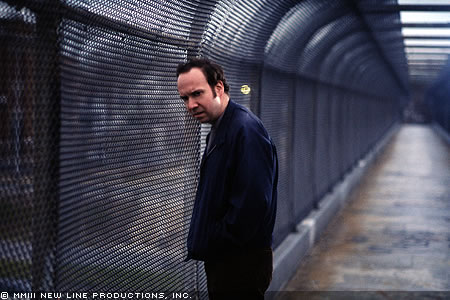
American Splendor (2003, dir. Shari Springer Berman, Robert Pulcini)

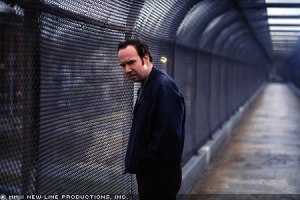
From my earlier review: “American Splendor is one of the most unusual comic book adaptations of the 2000s. While this is an origin story, there are no capes or tights. Instead its vintage records and perpetual scowls. Cleveland native, Harvey Pekar began chronicling his life in underground comic books in the 1970s after befriending cult comix artist Robert Crumb. The film works as a docudrama, that features the real Pekar commenting on his life mixed with Giamatti acting out the anecdotes. Even the illustrations from the comic books are animated and spliced amongst the live action sequences. The entire form and style of this film is unlike any other I have seen and have not seen it attempted since. Giamatti does an excellent job mimicking Pekar, but if you have seen the film you can agree nothing surpasses the natural curmudgeon of the original.”

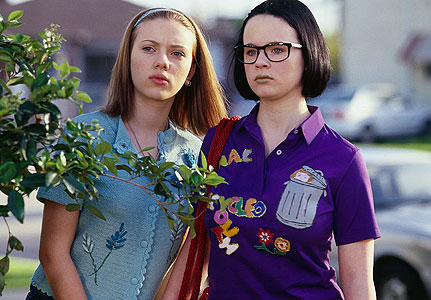
Ghost World (2001, dir. Terry Zwigoff)

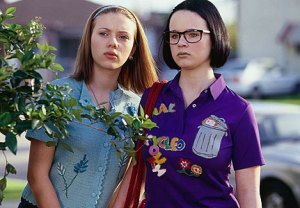
Based on the graphic novel by Daniel Clowes, Ghost World follows the post-high school graduation summer of surly teen, Enid (Thora Birch) and her best friend, Rebecca. The two girls move from episodic moment to episodic moment, slowly growing apart. Enid is the voice for many of the mid- to late 90s proto-hipsters. She has a love of old blues vinyl and kitschy ironic pop culture, and it comes across in a less forced away than many contemporary hipsters do. The summer is a growing time for Enid as her poor temper is forced to dissipate as the responsibilities of adulthood set it. A very sharp, clever film that appeals to the introverted English major type (as I can speak from experience).

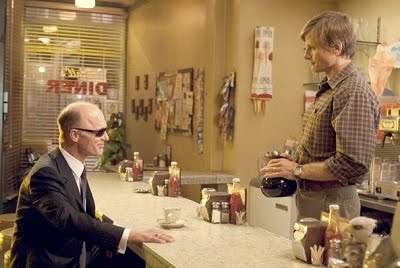
A History of Violence (2005, dir. David Cronenberg)

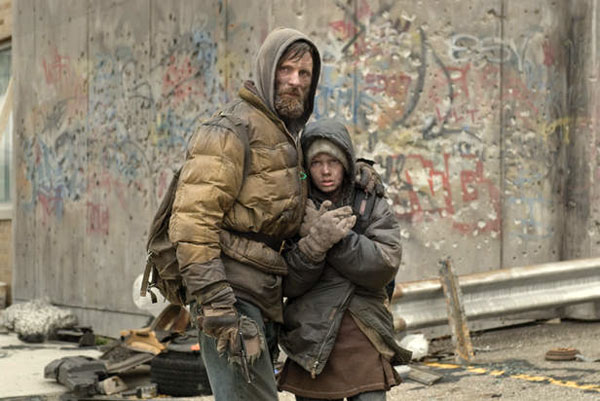
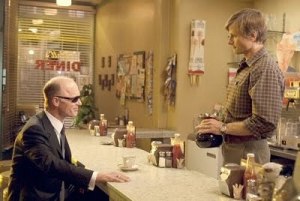
Based on the overlooked graphic novel by crime writer John Wagner, Cronenberg reinterpreted it and took the main character, Tom McKenna (Viggo Mortensen) in a different direction. The inciting incident, a pair of murderous thieves hold up Tom’s small town diner, is the same but the choices the character makes and how figures from his past choose to interact with him is where the changes occur. This is a wonderful film that displays Cronenberg’s gifts as a filmmaker. He is totally comfortable in quiet moments and knows how to jolt the audience without playing to cheap shocks. This is also a film that gives an ending that doesn’t need a twist to create a powerful impact.
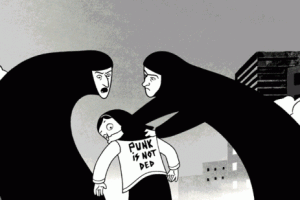

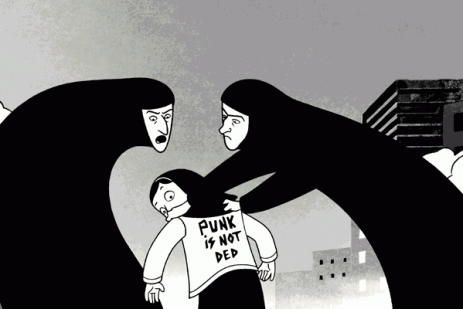
Persepolis (2008, dir. Marjane Satrapi, Vincent Paronnaud)

Unlike the other films of this list, the author of the graphic novel had a direct hand in the adaptation and direction of their work. Persepolis chronicles Marjane Satrapi’s adolescence in Ayatollah-ruled Iran and her eventual relocation to Europe when her parents become afraid of the oppression in their country. Both the film and graphic novel give a wonderful history lesson on Iran and showcase how great America’s ignorance is about Iran’s relations with Iran and the rest of the Arab world. On a microcosmic level, it is also the story of a young girl who tests the borders of rebellion and transitions through the awkward moments of childhood into a confident and brilliant young woman.

The James Dean Trilogy – East of Eden

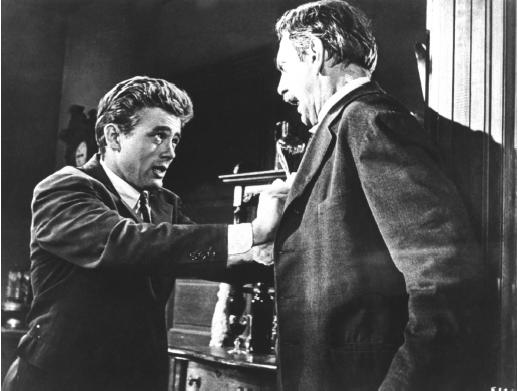
East of Eden (1955, dir. Elia Kazan)
Starring James Dean, Raymond Massey, Burl Ives

This month, I’ll be looking at the three core works of James Dean’s sadly short career. I didn’t see any of these films until 2007 when, while living in Washington state, I decided to check out Giant from the public library. What I discovered was the reason behind an icon. So often a pop culture figure’s work has been so far removed from our contemporary experiences that it is hard to understand exactly how they became so iconic. I have found that Dean was indeed a brilliant actor with a potential I don’t see in many others.

Dean made his starring role debut in Elia Kazan’s East of Eden (based on the novel of John Steinbeck), playing the tragic loner Cal Trask. Cal is the son of Adam, a farmer and brother to Aron. Throughout his life, Cal has been overshadowed by Aron’s accomplishments and looked at as the black sheep of the family. The mother mysteriously disappeared when the boys were children and Cal remembers little of her. The story is a reworking of the Cain and Abel story and mixes it with the gorgeous landscape of Salinas and Monterey, California.

The filmmaking at work here is a unique artifact of its time. Kazan is a deft director who is responsible for such masterpieces as On the Waterfront and A Streetcar Named Desire. And it was Kazan’s keen eye who discovered James Dean as he was performing on Broadway. Dean was a major proponent of method acting, a technique that transitioned from the more classical theatrical style of acting into a more psychological and physically interpretive method. Method acting bridges a sort of gap between acting and dance. This is seen in the way Dean almost spasms through his performance, he twists and contorts his body in unison with the psychological torment. The character of Cal is stunted mentally and Dean chooses to express that through his movement. Cal is constantly jamming his hands into his pockets, kicking at the dirt nervously, just like an awkward adolescent.

Dean was reportedly very uncooperative on set, and Kazan admitted he would encourage this by antagonizing the actor. Kazan believed that keeping Dean in such a mentally upset state would, in turn, enhance the anger and frustration of Cal on the screen. Dean’s co-star, Julie Harris is credited with truly enhancing the performance by adjusting her own to become more low-key and further highlight the distinction of what Dean was doing. For a first major film performance, Dean delivers in an astonishing way. Method acting was a new and exciting development in theater and its no wonder audiences were entranced with Dean.

Coming up next: I take a look at the film that made Dean an icon, Rebel Without A Cause.

Film 2010 #6 – Youth in Revolt

Youth in Revolt (2009, dir. Miguel Arteta)
Starring Michael Cera, Steve Buscemi, Jean Smart, Ray Liotta, Zach Galafinakis, Justin Long

In 2003, Arrested Development debuted on Fox, and introduced America to the nebbish, nervous comedic talent of Michael Cera. He made George Michael one of the most lovable sad sacks in television history. With the series’ cancellation, Cera would go on to star in the Apatow-produced Superbad, wherein he reprised the George Michael personality. Since then, Cera’s stock had begun to drop as it appears he’s becoming typecast in a very disconcerting way. Youth in Revolt appears to be a partial attempt at breaking out of that mold, but sadly only reconfirms Cera’s career may have an early expiration date without some drastically different roles.

Based on the novel Youth in Revolt: The Journals of Nick Twisp by C.D. Payne, the film follows high schooler Nick Twisp, an intellectual lad who, despite his deft use of language, is unable to relate to his classmates. His life is transplanted to a trailer park miles away after his mother’s current beau scams some Navy men. Twisp meets the francophiliac Sheeni Saunders who becomes his object of obsession and leads to a series of catastrophic incidents.

Twisp is a strange mix of Cera’s afformentioned George Michael and the wise cracking of Ferris Bueller. Whereas, Bueller possessed an abundance of confidence about his plans, Twisp manages to mutter clever comebacks under his breath and awkward hatches schemes. I felt that Cera was probably of the mind that this film would help him break the typecasting he’s undergoing, but once on set he was coerced into going through the same muttery shtick that has defined his career so far.

Director Miguel Arteta is best known for indie pics Chuck and Buck (2000) and The Good Girl (2002), and since then has worked primarily in television (Ugly Betty, Freaks and Geeks, Six Feet Under). Because of Arteta’s background in the indie film scene of the late 90s/early 00s, Youth in Revolt has a the feel of those low budget pictures. The way in which things spiral continuously downward for Twisp felt to me like many indie black comedies. While, Arteta is very skilled at directing he offers few inspiring visual twists, aside for a couple stop motion animation sequences, that don’t add much to the film.

Youth in Revolt is not a bad film, but it feels like an opportunity missed. The material provided the opportunity for Cera to truly break free of the audience’s expectations, but it seems the filmmakers were too scared to attempt that. At the end of the day it will provide a few chuckles, but doesn’t contain much beyond that.

Film 2010 #7 – Up in the Air

Up in the Air (2009, dir. Jason Reitman)
Starring George Clooney, Vera Farmiga, Anna Kendrick, Jason Bateman

I come to the table with a strong dislike of the work of Jason Reitman. I didn’t find Thank You For Smoking funny and reviled Juno like the swine flu. That said, Reitman had a lot to prove to me and I felt this film was his “last shot” before I wrote him off as a director who simply didn’t make the sort of movies I enjoy.

Based on the novel by Walter Kirn (he also wrote the wonderful Thumbsucker which was also adapted to the screen), the story follows Ryan Bingham (Clooney), a “career transition counselor”, or in plain english, the man your boss hires when he’s too scared to fire you himself. Bingham is at home in airports and first class seats. The entire process has evolved to an almost ritualistic state, and Bingham takes great pride in his impeccable ability to traverse and flow through the environment like water. The inevitable snag occurs when young upstart Natalie Keener (Kendrick) proposes a new video conferencing system to replace the face to face firings Bingham’s firm provides. Bingham is terrified that his entire life and soul is at stake and volunteers to take Keener on his route in an effort to prove that the face to face is an essential part of their job.

Reitman has begun to win me over. Gone is the smirking humor of Thank You For Smoking and the nails-on-chalkboard hip-speak of Juno. There are still traces of the director’s hand but it feels like a maturation has occurred. Bingham is developed quite organically from a simple pastiche of Clooney’s typical film persona and into a truly broken and incredibly pathetic man. Vera Farmiga plays Alex, a woman who refers to herself as just like Bingham “but with a vagina”. They meet in an airport bar and foreplay consists of showing off their voluminous elite status cards from luxury hotels and car rental services. Their relationship feels shallow and it is and how that relationship plays out was quite a surprise to me. There are a few beats in the film, involving the transformation of Bingham’s priorities and it feels like Reitman is taking us into heavily tread territory, but he completely reverses things in a very satisfying way.

The film is very much a product of contemporary events. Bingham’s firm is seeing a boon in business as the economy tanks. Bingham himself seems to be losing the assurance he normally feels in his job as he is contracted to fire an ever growing number of the workforce. The film comes across a bit heavy handed in some of these moments, particularly a ending montage sequence where real people who have been laid off in the last year talk directly to the camera about their feelings and reactions. While I thought they had good insight, the insertion of this into the film felt slightly pretentious. I think a documentary of said material would be a much more interesting venture though.

In the end, Reitman has duly impressed me. I went from having incredibly low expectations for his third film, to finding it to be enjoyable. I think his tempering and maturation as a filmmaker are very apparent, and I’m actually interested in what his next project will be.

Film 2010 #1 – Sherlock Holmes

Sherlock Holmes (2009, dir. Guy Ritchie)
Starring Robert Downey, Jr., Jude Law, Rachel McAdams, Mark Strong, Eddie Marsan, James Fox

There are few characters more iconic than Sherlock Holmes. He is a figure strongly ingrained in the pop culture psyche, wearing his deerstalker hat while sporting a pipe and magnifying glass. When British director Guy Ritchie was announced to be helming the current incarnation of the most famous detective, I wasn’t to intrigued. Since 2002’s Swept Away, Ritchie has seemed to be unable to find direction in his film career. With Sherlock Holmes he has managed to combine his dynamic visual storytelling style with plenty of humor to create an incredibly fresh twist on the icon.

The plot is not based on any particular Holmes’ tale, but references many characters and cases familiar to those who have read the stories. Holmes and Watson have just helped Inspector LeStrade apprehend Lord Blackwood, a member of the House of Lords involved in a satanic Illuminati ritual. Blackwood tells Holmes of a larger power at work before he is hung and appears to return to life. While Holmes attempts to uncover the truth behind Blackwood he must deal with Watson’s impending engagement and the return of his greatest adversary and infatuation, Irene Adler.

What Ritchie has effectively done is make a buddy cop movie set in the London of the late 19th century. The dynamic between Holmes and Watson is much different than previously presented and feels much more in tune with Sir Arthur Conan Doyle’s intent. They are a bickering married couple, with Holmes blatant jealous and worried over the idea of Watson leaving him to marry his fiancee. Ritchie also brings in Holmes’ past as a boxer, as aspect of the character greatly ignored in the previous interpretations.

What surprised me the most was how funny the film is, and because of that it should be classified much more as a comedy than anything else. I came to the realization that Robert Downey, Jr. is a good actor but what he’s been asked to play for the last decade or so is a pastiche of himself. Other than an accent there is not much difference between how he plays Holmes and Tony Stark. What I enjoyed wasn’t necessarily his acting, but rather his ability to do what he does so damn well.

The film is definitely a fresh look at the icon of Sherlock Holmes. Anyone who holds the traditional film portrayal, first seeded by Basil Rathbone, will find this to be quite jarring. For audiences who are ready for a new take, it is one of the most fun films they will see this year. And in the case of any good studio franchise, they leave this one open for an inevitable sequel.

My Top 10 Favorite Films of 2009

I’ve been keeping track of all the films I watch annually since 2005 and this year was one of the most prolific. I was able to see 200 new films and picking a top 10 was an incredibly hard task. That said, here are my top 10 favorites with some comments, followed by the long list of my viewing for 2009.

10) Where The Wild Things Are (2009, dir. Spike Jonze)

I love that Jonze and, co-writer, Dave Eggers managed to maintain the honest, darker tone of Maurice Sendak’s children’s book. Max acts like a real kid, not a movie script child. I especially appreciated the skillful mix of traditional puppetry and CG effects that made the Wild Things solid and real beings.

9) Inglourious Basterds (2009, dir. Quentin Tarantino)

From the trailers, I was led to believe this was an action shoot-em up and that turned me off immediately. I love Tarantino but had no interesting in a WWII action pic. However, a series of interviews turned me around and I found it to be yet another incredibly original film from a master. In essence, its a WWII fairy tale.

8) Bronson (2009, dir. Nicolas Winding Refn)

This one came out of nowhere but grabbed my attention due to its blatantly Kubrickian influence. Sort A Clockwork Orange about a real person. The film is less concerned with plot than it is establishing a dynamically visual character sketch.

7) Ballast (2008, dir.Lance Hammer)

A film whose merits lie strongly in its tone. The landscape is a familiar one to those of us who grew up in the rural South. The film also presents a look at contemporary rural Southern African-Americans in a very real and honest manner.

6) Antichrist (2009, dir. Lars von Trier)

Despite the hubbub over the graphic violence in, von Trier is able to evoke a strong sense of horror that so many mainstream horror movies never attempt. It’s typical von Trier in its attempts to upset the audience, not just through the brutality, but also through the incoherence of many story elements. And in the end, that’s why I love this director!

5) Precious (2009, dir. Lee Daniels)

Gabby Sidibe’s performance as the title character is so impressive, especially after seeing her interviews and realizing how drastically different she and her life are from this character. In this film, I saw the lives of a good number of children I’ve worked with. The dark nature of living below the poverty is broken though by a strong sense of hope in the film’s ending, that never comes off as maudlin.

4) Harlan County, USA (1976, dir. Barbara Kopple)

Though made thirty four years ago, this film is just as relevant, given the climate of economic disparity and anti-unionist rhetoric being spouted. Kopple chronicles the struggle between a group of poor Kentuckian miners and the Duke Power Company, in a strike the ended in blood being spilt. You may go into the film thinking it can’t engage you, but it will captivate you.

3) Synecdoche, New York (2008, dir. Charlie Kaufman)

Kaufman produced some of the best written films of the 2000s and this directorial debut is the culmination of all his themes and concepts. The film works as a matryoshka, a Russian nesting doll, and seems to have a kinship with much of Michel Gondry’s work.

2) Perfume: The Story of a Murderer (2006, dir. Tom Tykwer)

One of the most overlooked films of the 2000s by one of the most over looked directors. Tykwer follows a very literary structure and presents a character who lacks the ability to be sympathetic but somehow makes us sympathize with him by the end of the film.

1) Waltz With Bashir (2008, dir. Ari Folman)

Check out my full review for my thoughts on this amazing film!

And here is the full list of the 200 films I saw in 2009

1. Near Dark (1987, dir. Kathryn Bigelow)
2. Taxi to the Dark Side (2008, dir. Alex Gibney)
3. Revolutionary Road (2008, dir. Sam Mendes)
4. Scrooged (1988, dir. Richard Donner)
5. Renaissance (2006, dir. Christian Volckman)
6. The Magic Christian (1969, dir. Joseph McGrath)
7. Rock School (2005, dir. Don Argott)
8. The Spirit (2008, dir. Frank Miller)
9. Mirrors (2008, dir. Alexandre Aja)
10. Synecdoche, New York (2008, dir. Charlie Kaufman)
11. Cinemania (2002, dir. Angela Christlieb, Stephan Kijak)
12. Henry Fool (1997, dir. Hal Hartley)
13. Moonshine (2006, dir. Roger Ingram)
14. Crazy Love (2007, dir. Dan Klores)
15. Doubt (2008, dir. John Patrick Shanley)
16. Slumdog Millionaire (2008, dir. Danny Boyle)
17. The Reader (2008, dir. Stephen Daldry)
18. Fay Grim (2006, dir. Hal Hartley)
19. Sleeping Dogs Lie (2006, dir. Bobcat Goldthwait)
20. Waltz With Bashir (2008, dir. Ari Folman)
21. Fears of the Dark (2008, dir. Blutch, Charles Burns, Marie Caillou, Pierre Di Sciullo, Lorenzo Mattotti, Richard McGuire)
22. Gran Torino (2008, dir. Clint Eastwood)
23. In Bruges (2008, dir. Martin McDonagh)
24. Foot Fist Way (2008, dir. Jody Hill)
25. Che, Part One (2008, dir. Steven Soderbergh)
26. Coraline (2009, dir. Henry Selick)
27. The Devil and Daniel Johnston (2005, dir. Jeff Feuerzeig)
28. Hard Eight (1996, dir. PT Anderson)
29. Friday the 13th (2009, dir. Dean Haspiel)
30. Pola X (1999, dir. Leos Carax)
31. Paris, Je T’aime (2006, dir. various)
32. The Ring 2 (2005, dir. Hideo Nakata)
33. Watchmen (2009, dir. Zach Snyder)
34. Sex Drive (2008, dir. Sean Anders)
35. Rachel Getting Married (2008, dir. Jonathan Demme)
36. Cabin Boy (1994, dir. Adam Resnick)
37. Puffball (2007, dir. Nicolas Roeg)
38. Semi-Pro (2008, dir. Kent Alterman)
39. Freddy Got Fingered (2001, dir. Tom Green)
40. Wild Tigers I Have Known (2006, dir. Cam Archer)
41. Confederate States of America (2004, dir. Kevin Wilmott)
42. Fuck (2005, dir. Steve Anderson)
43. Behind the Mask: The Rise of Leslie Vernon (2006, dir. Scott Glosserman)
44. Standard Operating Procedure (2008, dir. Erroll Morris)
45. Perdita Durango (1997, dir. Alex de la Igelsia)
46. Glass: A Portrait of Philip in 12 Pieces (2007, dir. Scott Hicks)
47. W. (2008, dir. Oliver Stone)
48. The Sinful Dwarf (1973, dir. Vidal Raski)
49. Lemora: A Child’s Tale of the Supernatural (1973, dir. Richard Blackburn)
50. Angel-A (2005, dir. Luc Besson)
51. The Room (2003, dir. Tommy Wiseau)
52. I Love You Man (2009, dir. John Hamburg)
53. Cthulhu (2007, dir. Dan Gildark)
54. Chop Shop (2007, dir. Rahmin Bahrani)
55. Monsters Vs. Aliens (2009, dir. Rob Letterman, Conrad Vernon)
56. Dig! (2005, dir. Ondi Timoner)
57. Zoo (2007, dir. Robinson Devor)
58. Observe & Report (2009, dir. Jody Hill)
59. X-Men Origins: Wolverine (2009, dir. Gavin Hood)
60. Safe Men (1998, dir. John Hamburg)
61. Chuck & Buck (2000, dir. Miguel Arteta)
62. Zach Galifinakis: Live at the Purple Onion (2007, dir. Michael Blieden)
63. The Wicker Man (2006, dir. Neil LaBute)
64. Grey Gardens (2009, dir. Michael Sucsy)
65. Mad Dog and Glory (1993, dir. David McNaughton)
66. Midnight Run (1988, dir. Martin Brest)
67. Bonnie and Clyde (1967, dir. Arthur Penn)
68. Crash (1996, dir. David Cronenberg)
69. Prime Cut (1972, dir. Michael Ritchie)
70. Special (2006, dir. Hal Haberman, Jeremy Passamore)
71. Papillon (1973, dir. Franklin J. Schaffner)
72. The Five Obstructions (2003, dir. Jorgen Leth, Lars Von Trier)
73. Haxan (1922, dir. Benjamin Christensen)
74. Shampoo (1975, dir. Hal Ashby)
75. S. Darko (2009, Chris Fisher)
76. Star Trek (2009, dir. JJ Abrams)
77. The Ninth Configuration (1980, dir. William Peter Blatty)
78. The Pledge (2001, dir. Sean Penn)
79. Heckler (2007, dir. Michael Addis)
80. Abel Raises Cain (2005, dir. Jenny Abel, Jeff Hockett)
81. Parents (1988, dir. Bob Balaban)
82. Harlan County, USA (1976, dir. Barbara Kopple)
83. Rubin and Ed (1991, dir. Trent Harris)
84. Eyes Wide Shut (1999, dir. Stanley Kubrick)
85. Bedtime Stories (2008, dir. Adam Shankman)
86. Fanboys (2008, dir. Kyle Newman)
87. The Unborn (2009, dir. David S. Goyer)
88. Terminator Salvation (2009, dir. McG)
89. Drag Me To Hell (2009, dir. Sam Raimi)
90. Trembling Before G-d (2001, dir. Sandi Simcha Dubowski)
91. Land of the Lost (2009, dir. Brad Silberling)
92. The Hangover (2009, dir. Todd Phillips)
93. Up (2009, dir. Pete Docter, Brad Anderson)
94. Deadgirl (2008, dir. Marcel Sarmiento, Gadi Harel)
95. Phoebe in Wonderland (2008, dir. Daniel Barnz)
96. Collateral (2004, dir. Michael Mann)
97. Sid and Nancy (1986, dir. Alex Cox)
98. Tell No One (2006, dir. Guilliame Canet)
99. Beach Party at the Threshold of Hell (2006, dir. Johnny Gillette, Kevin Wheatley)
100. The Cable Guy (1996, dir. Ben Stiller)
101. Sita Sings the Blues (2008, dir. Nina Paley)
102. Bruno (2009, dir. Larry Charles)
103. IOUSA (2008, dir. Patrick Creadon)
104. Moon (2009, dir. Duncan Jones)
105. Transformers: Revenge of the Fallen (2009, dir. Michael Bay)
106. Scream 3 (2000, dir. Wes Craven)
107. Adventureland (2009, dir. Greg Mottola)
108. In the Loop (2009, dir. Armando Iannucci)
109. Zazie dan le Metro (1960, dir. Louis Malle)
110. Plague Town (2008, dir. David Gregory)
111. Pontypool (2008, dir. Bruce McDonald)
112. Splinter (2008, dir. Toby Wilkins)
113. Vicky Cristina Barcelona (2008, dir. Woody Allen)
114. Bart Got A Room (2009, dir. Brian Hecker)
115. Harry Potter and the Half-Blood Prince (2009, dir. David Yates)
116. Green Lantern: First Flight (2009, dir. Lauren Montgomery)
117. The Strangers (2008, dir. Bryan Bertino)
118. Bamboozled (2000, dir. Spike Lee)
119. Funny People (2009, dir. Judd Apatow)
120. Fur: An Imaginary Portrait of Diane Arbus (2006, Steven Shainberg)
121. Tetro (2009, dir. Francis Ford Coppola)
122. Gigantic (2008, dir. Brian Aselton)
123. Orphan (2009, dir. Jaume Collet-Serra)
124. Visioneers (2008, dir. Jared Drake)
125. Home Movie (2008, dir. Christopher Denham)
126. Boogie Man: The Lee Atwater Story (2008, dir. Stefan Forbes)
127. G.I. Joe (2009, dir. Stephen Sommers)
128. Big Man Japan (2007, dir. Hitoshi Matsumoto)
129. Second Skin (2008, dir. Juan Carlos Pineiro-Escoriaza)
130. Used Cars (1980, dir. Robert Zemeckis)
131. Knowing (2009, dir. Alex Proyas)
132. The Informers (2009, dir. Gregor Jordan)
133. Domino (2005, dir. Tony Scott)
134. Push (2009, dir. Paul McGuigan)
135. District 9 (2009, dir. Neil Blomkamp)
136. World’s Greatest Dad (2009, dir. Bobcat Goldthwait)
137. The Corporation (2003, dir. Mark Achbar, Jennifer Abbott)
138. Bronson (2009, dir.Nicolas Winding Refn)
139. Edmond (2005, dir. Stuart Gordon)
140. The Brothers Bloom (2009, dir. Rian Johnson)
141. Antichrist (2009, dir. Lars von Trier)
142. Empire of the Sun (1987, dir. Steven Spielberg)
143. Wall Street (1987, dir. Oliver Stone)
144. Grace (2009, dir. Paul Solet)
145. Year One (2009, dir. Harold Ramis)
146. Lymelife (2008, dir. Derek Martini)
147. 500 Days of Summer (2009, dir. Marc Webb)
148. Christmas on Mars (2008, dir. Wayne Coyne)
149. Manderlay (2005, dir. Lars von Trier)
150. Superman/Batman: Public Enemies (2009, dir. Sam Liu)
151. Trick R’ Treat (2008, dir. Michael Doughtry)
152. Inglourious Basterds (2009, dir. Quentin Tarantino)
153. Life is Sweet (1991, dir. Mike Leigh)
154. Owning Mahowny (2003, dir. Richard Kwietniowski)
155. Adam Resurrected (2008, dir. Paul Schrader)
156. Tideland (2005, dir. Terry Gilliam)
157. Jennifer’s Body (2009, dir. Karyn Kusama)
156. Sick Girl (2007, dir. Eben McGarr)
157. Pandorum (2009, dir. Christian Alvart)
158. Frequently Asked Questions About Time Travel (2009, dir. Garreth Carravick)
159. Zombieland (2009, dir. Ruben Fleischer)
160. Big Fan (2009, dir. Robert D. Siegel)
161. Where the Truth Lies (2005, dir. Atom Egoyan)
162. Paranormal Activity (2009, dir Oren Peli)
163. Perfume: The Story of a Murderer (2006, dir. Tom Tykwer)
164. The Informant! (2009, dir. Steven Soderbergh)
165. You’re Welcome America: A Final Night with George W. Bush (2009, dir. Marty Callner)
166. Frontrunners (2008, dir. Caroline Suh)
167. Humpday (2009, dir.Lynn Shelton)
168. Adoration (2009, dir. Atom Egoyan)
169. I Sell The Dead (2008, dir. Glenn McQuaid)
170. Roman Polanski: Wanted & Desired (2008, dir. Marina Zenovich)
171. Paper Heart (2009, Nicholas Jasenovec)
172. American Ruling Class (2005, dir. John Kirby)
173. Homicide (1992, dir. David Mamet)
174. Franklyn (2009, dir. Gerald McMorrow)
175. The Transporter (2002, dir. Corey Yuen)
176. The Magdalene Sisters (2002, dir. Peter Mullan)
177. The House of the Devil (2009, dir. Ti West)
178. The Triplets of Belleville (2003, dir. Sylvain Chomet)
179. BSG: The Plan (2009, dir. Edward James Olmos)
180. Spider (2002, dir. David Cronenberg)
181. Ballast (2008, dir. Lance Hammer)
182. Radiant City (2006, dir. Jim Brown, Gary Burns)
183. Medicine for Melancholy (2008, dir. Barry Jenkins)
184. Extract (2009, dir. Mike Judge)
185. The Box (2009, dir. Richard Kelly)
186. The Cove (2009, dir. Louis Psihoyos)
187. Diagnosis Death (2009, dir. Jason Stutter)
188. Sauna (2008, dir. Antti-Jussi Annila)
189. Tokyo (2008, dir. Michel Gondry, Leos Carax, Joon-ho Bong)
190. The Fantastic Mr. Fox (2009, dir. Wes Anderson)
191. Trumbo (2007, dir. Peter Askin)
192. Cloudy With A Chance of Meatballs (2009, dir. Phil Lord, Chris Miller)
193. Stay (2005, dir. Marc Forster)
194. Herb & Dorothy (2009, dir. Megumi Sasaki)
195. Where The Wild Things Are (2009, dir. Spike Jonze)
196. Avatar (2009, dir. James Cameron)
197. The Invention of Lying (2009, dir.Ricky Gervais, Matthew Robinson)
198. An Education (2009, dir. Lone Sherfig)
199. Precious (2009, dir. Lee Daniels)
200. Ravenous (1999, dir. Antonia Bird)

Film 2010 #5 – A Serious Man


A Serious Man (2009, dir. Joel and Ethan Coen)

The film begins with a prologue, where a Jewish couple, some time in the late 18th/early 20th century are presented with a conundrum. A rabbi has appeared at their door after an invitation from the husband. However, the wife has heard that this rabbi died three years before and believes what is in their home is a dybbuk, a sort of Jewish demon. The prologue is presented in a way that leaves both the possibility of the rabbi being who he claims and being the dybbuk equally valid. Thus, the film links itself to the paradox of Schroedinger’s Cat.

Set in 1967, the plot focuses on college mathematics professor Larry Gopnik. Larry is a modern day Job, having his wife ask for a divorce, her new lover passive-aggressively maneuvering his way into the home, two teenage children who could care less about him, a student bribing for a higher grade, and general disdain from all those around him.

For this latest film from Joel and Ethan Coen, the duo have departed from casting big name actors and have opted for a melange of recognizable character actors and stage performers. The film is highly steeped in Jewish culture and likely contains many autobiographical elements. It is highly impressive that the same minds behind No Country For Old Men and The Big Lebowski are able to deftly move between almost genre of film and produce work of superb quality. A Serious Man is no exception, despite its drastic casting shifts.

There is a lot of pay close attention to in this film, and the way the story ends is inevitably going to frustrate those viewers who like loose ends tied up. A key piece to getting the most out of the film is keep many of the stories told, including the prologue in mind. It’s mentioned in the film, that in Judaism stories and folktales are a crucial part of understanding the challenges placed before a person. There are many stories told in this film and all of them have themes and ideas that play out in the climax of the film.

I found A Serious Man to be one of the most intellectually rewarding of the Coens’ work, which says a lot when you look at the quality of their career. It’s in their continuing tradition of going completely against the grain and expectations of their audience, and its concepts and questions will linger with you for days and weeks to follow.

Film 2009 #199 – Precious

Precious (2009, dir. Lee Daniels)
Starring Gabby Sidibe, Paula Patton, Mo’Nique, Mariah Carey, Lenny Kravitz, Sherri Shepherd

I waited a long time to see this film, not because I lacked interest in its subject matter, but, because of my time in inner city schools, I knew it was going to affect me in a rough way. I have worked with primarily African-American students in low income situations and, while many of them come from loving families that give support in the best ways they know how, there are also a fair share that are stuck in multi-generational cycles of destructive parenting.

The story follows Precious, a 16-year old living in 1987 New York City, repeating the 7th grade, and in the middle of her second pregnancy. Her mother, Mary, is incredibly abusive towards Precious which stems from the fact that her husband is the father of Precious’ two children, the first of which was born with Down’s syndrome. After the discovery of her second pregnancy, Precious is moved to a special school for struggling students in an effort to get her a GED. Her mother is threatened by this, believing it will result in her welfare benefits being removed and becomes increasingly more vicious.

This is a hard film to talk about, especially from the perspective of a white American male. I don’t necessarily believe I feel white guilt but I definitely feel a sympathy for the African-American community from my first hand experiences working with their students. For the majority of the film, Mary represents a very extreme type of person, and in reality transcends race. There are plenty of white parents, many of whom I have encountered here in the South who develop a resentment of their offspring as a result of wretched economic circumstances. Mo’Nique delivers a performance I never would have expected out of her, especially during her final monologue where we finally get some solid information about Precious’ upbringing.

A lot of critics are worried that Lee Daniels’ portrayal of African-Americans is helping to feed a terrible stereotype of the community. I completely understand those fears because, seen through the eyes of a filmgoer who does not critically view cinema (and sadly many of them don’t, as evidenced by the success of Avatar), this could reinforce negativity. I like to the view as an piece of honest encouragement to African-American youth. The film doesn’t resolve everything in a pretty bow, but it does show a strong black female character who, with a support system, manages to make things better for herself and is determined to continue to make things better.

Film 2009 #195 – Where The Wild Things Are

Where The Wild Things Are (2009, dir. Spike Jonze)
Starring Katherine Keener, James Gandolfini, Catherine O’Hara, Lauren Ambrose, Paul Dano, Chris Cooper, Forest Whitaker

Taking up only around a dozen pages, Maurice Sendak’s Where the Wild Things Are seemed more appropriate as an animated short, rather than a live action feature. Thanks to the creative genius of Spike Jonze, the story was able to be fleshed out further without losing the themes and tone of the picture book. Instead of opting for the current trend of CG animation, Jonze turned to an older and more conventional method by hiring the Henson Creature Shop to design and construct full body suits of the Wild Things. The result is a film that says as much to adults as it does children.

The story, familiar to most, is very simple: Young Max is stomping around the house in his monster suit, bites his mother and is punished. Instead of Max’s bedroom transforming into the forest, Jonze sends Max into the real woods and to a scenario that causes us to ask whether he actually experienced this or not. Max ends up on an island, populated by giant monsters which Max quickly conquers as their king. In the world of the film, a conflict arises between two Wild Things: KW and Carol. This provides the crux of the drama in the film and parallels the typically volatile relationship Max experiences with his sister.

Jonze creates a tone that very few children’s films possess; a tone of honesty. Max behaves like a real child, not a Disney-fied picture of perfection or precociousness. Max has his own sense of illogical, child-like logic and reacts with violent emotion. Author Sendak has commented, about the original text, that it was meant to speak to children about being angry and not play to the wants of parents. The voices of the Wild Things are also filtered through Max as well and represent both the different sides of his personality as well as the way he sees people in his life.

Many parents complained that the film was too dark but I see it as no darker than the original story. I think many parents fail to realize the honesty of Sendak’s text, which in turn makes it a “dark” story in comparison to the false sunniness of many children’s stories. I also think, unlike films such as Shrek and Madagascar and films of that kind, Where the Wild Things Are has true intellectual “nutritive value”. Jonze has made a film that will provide something new and valuable to audiences as they grow older.