
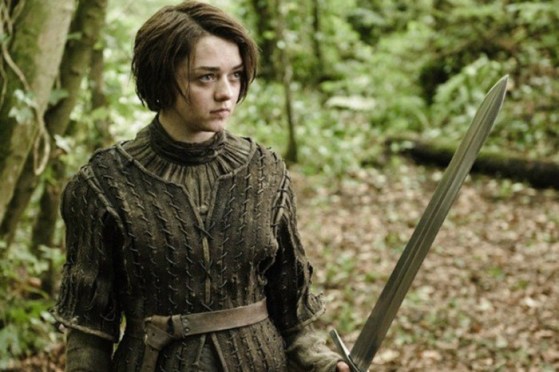
After posting my quick thoughts on HBO’s recently wrapped up shows I noticed a comment online referencing what I referred to as Arya Stark’s “dark path”. The comment mentioned how there was no critique of the bloodshed dealt by Jon Snow or Daenerys Targaryen. One note of clarification, Arya Stark has killed ten people so far in the television series. Walder Frey was not her first, but just the latest in her path of revenge. But it I think Arya Stark is a topic worth exploring in some more depth so let’s do this.
First, I want to speak about my personal perceptions of Arya. When we are introduced to the character in the television series the actress playing her was around 12/13 years old. My view of the timeline of the series is not as much time has passed in show as in real life. For instance, the end of Season 5 with the murder of Jon Snow is immediately continued with the start of Season 6 with maybe a few hours passing. There may be some reasonable fan timelines that work it all out, but from my own personal perception Arya is not far removed from when we first met her. The same goes for Bran, I still see him as the child he was when we met him.
Now, my teacher brain sort of takes over when it comes to Arya in certain instances. If I were to meet a child in their early teens who had these sorts of anger issues and had composed a revenge list I would be very worried for that child, and I hope you would be too. We recognize that as unhealthy behavior. Spending your life plotting revenge against people is no way to live. When I say “dark path” I am thinking about the emptiness of pure revenge as a goal. Once all the names are crossed off on that list, then what? I believe you’re left with the trauma of reliving those deaths in your mind over and over again and that is destructive. Game of Thrones is chock full of characters in that situation, not the least is Arya’s old pal The Hound. While he puts forth a sense of callous detachment, he has been scarred psychologically by what he has done.
Jon Snow and Daenerys Targaryen have also killed their fair share. Jon, as leader of the Night’s Watch and leading the Battle of Winterfell, is responsible for the deaths of many. We don’t even have the time to get into the thousands of deaths Dany has personally ordered. Why do I perceive what they do as different from Arya? Jon Snow seems to be forced into almost every major action he takes and I view him as a character who should have a tragic ending. Everything about him so far sings of tragedy to me. I expect he’ll be given a heroic ending, which feels lazy. As for his actions, colored by his role as a military leader I have probably excused them. He didn’t kill for his personal benefit but out of duty. Now there is definitely a conversation to be had about the morality of that and as I have gotten older I have grown into more a pacifistic. Killing White Walkers is one thing, but killing anyone else should come with serious moral quandary. I would like to think the way the Battle of Winterfell was shown in the series highlighted how grotesquely chaotic being in the heart of battle was. The execution of Ramsay Bolton was also a moment that I felt very conflicted about. There is plenty of narrative justification to have him die a truly horrible death. Yet, I looked away from the screen as the dogs were set loose. It wasn’t because I’m uncomfortable with the gore, it’s just the larger moral implications as to what this does to Sansa. Yes, she murdered her rapist and he will never do that again. But as a person, I would think killing anyone is going to deeply damage parts of yourself. I think we can see that Jon Snow has shown lots of signs of a person with PTSD.
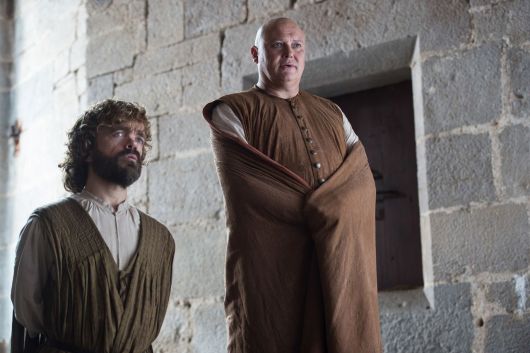
Dany seems to be the character we all cheer for when she goes about mass slaughtering. She’s killing slavers, right? So that makes it okay? No, they’re still people. People albeit who have probably killed lots of other and we know for sure have stolen the lives and freedoms of millions. More on this later. Dany’s goal can be summarized as “free the people of the known world and take back the throne of the Seven Kingdoms”. This goal lies somewhere between that of Jon Snow (duty) and Arya Stark (revenge). Freeing the slaves is a good thing. Taking back the throne of Westeros is a purely selfish thing. I’ve often thought why she shouldn’t be content to rule the lands where she is. The people love her, she seems happy among them. But there is this implied sense of the throne being a rightful honor. How has the Iron Throne been claimed throughout history: One ruling house is killed by another ruling house who is killed by another, so on. No one is actually entitled to the throne other than someone who is simply good at killing for it. I think Varys has had a number of moments where he enlightens Tyrion and us to that fact. Any King or Queen is inevitably going to end up dead for the next King or Queen. To paraphrase Mel Brooks, “It’s *not* good to be the king.”
Revenge has been one of the most common themes in literature through the ages. And it’s been handled in a number of ways. Hamlet ends with everyone dead, Carrie ends with our protagonist losing her humanity while getting revenge, and The Count of Monte Cristo may be one of the happiest revenge stories. I think my views on revenge were shaped by a World Lit class I took in college where we read a few of the plays in The Oresteia. I had to brush the cobwebs away and do a little googling to get my mind refreshed on the details of these works. The Oresteia were a trilogy of Greek dramas about the fall of the House of Atreus. If you’re interested in reading them the three plays are Agamemnon, The Libation Bearers, and The Eumenides.
The dramas are about the cycle of blood vengeance. It begins with Clytemnestra plotting and carrying out the murder of her husband, Agamemnon when he returns from the Trojan War. From there it is one act of vengeance after another to “balance the scales”. The chorus of these plays are the Erinyes or Furies, the embodiment of revenge as justice. But as the story goes on the absurdity of this type of justice is highlighted. When the gods become involved, particularly Athena, it’s decided that man must develop a system of laws that take retribution out of the hands of the wronged and works to truly balance the scales. The Erinyes are transformed as a result and become the Semnai or Venerable Ones. This series of plays was focused around ideas of law and justice that were being developed in Athens. It was the birth of social progress and justice, stepping away from blood retribution and finding a better more humane way. So anytime I watch or read something where a protagonist is getting a violent style of personal justice I get a little uncomfortable. I understand the buttons it pressed in our brains of narrative satisfaction, but I appreciate when writers show the aftermath as well.
With my view as Arya as a child, I see her as the hope that the culture could move on from the old ways of blood vengeance. Narratively, it is very satisfying to see her scratch the evil bastards who harmed her family off the list, but I truly hope that we get story about what she does after. If you focus your entire life around revenge, then what happens when you get your revenge? Dany at least plans to rule Westeros, her methods are very questionable, but at least that goal has additional goals implied if she achieves it. What does Arya do when the last name is scratched off the list? The story of how she processes that and tries, or fails, to become someone beyond vengeance could be a fascinating story. Or, like the end of The Searchers, we could see her unable to enter the gates of Winterfell, changed into something else and wander off into the winter wastelands. There is temporary satisfaction in the moment of the kill for her, but if she is to feel like a real person, I want there to be contemplation on what it means for her as human being to travel this path. There have been moments where Dany has had to face the folly of her naive choices, that’s something I would like to see for Arya. I think I like Arya so much that I want that character to have a meaningful ending beyond simply just killing the bad guys.




 In the vein of Serial and The Black Tapes, comes this intriguing audio drama. Lia Haddock is an American Public Radio journalist who has a personal connection to an incident that occurred decades ago at neuroscience research facility in Tennessee. Three hundred people vanished without a trace and the government has worked to cover up the truth. As Lia digs deeper, she uncovers a vast horrific conspiracy. A beautiful artifact that immerses the listener in this dark parallel world. Only six episodes with a companion prequel novel in the works.
 Paul F. Tompkins (Mr. Show, Best Week Ever) hosts this series that is half-interview show, half-improv show. Each episode begins with Tompkins interviewing a celebrity guest. In the second half, the guest offers up a location and Tompkins and his improvisers create a longform improv based on both the suggestion and tidbits from the guest’s interview. These are some amazing improvisers and they produce hilarious comedy.
  Hayes Davenport and Sean Clements aren’t industry douchebags, they just play them on a podcast. Each episode of Hollywood Handbook begins with the duo in media res humblebragging through a story that involves a mid-tier celebrity (think Elliot Gould or Anne Heche). What’s most cringey/captivating about Handbook is how real these characters feel. I’ve never worked in the entertainment industry, but even I can feel the genuine nature of the smarm coming off these characters. The target of their passive aggressive sneers is poor Engineer Cody. A classic duo of episodes are the dueling interviews with comedian Chris Gethard (whose podcast is featured below). Hayes, Sean, and a few friends also made an amazing appearance on Earwolf’s flagship Comedy Bang Bang podcast.
 hang up, the caller can at any time. After one hour the call will automatically end. From this simple premise comes some of the most beautiful and funny human interactions you’ll be witness to. Callers often feel awkward at first, but there is inevitably some moment where they make a revelation about themselves. From there you can’t help but be pulled into the story.


 Continuing threads laid in Batman: Rebirth, our story begins with Batman and Gordon meeting on the police station rooftop to discuss a raid on a nearby military base. The police have not located all the stolen weapons and fate would have it one of them is launched and strikes a commercial airliner over Gotham. The rest of the issues is tightly written action sequence that has Bats communicating with Alfred and his new partner, Duke Thomas (formerly of We…Are Robin). Alfred and Duke runs ops from the Batcave and guides Batman through the process of literally lassoing the plane and steering it around Gotham. The big twist is the final panel introduction of Gotham and Gotham Girl, apparent Superman and Supergirl analogs? The weakest part of this issues is some of David Finch’s art, I have never been a huge fan of his work. I definitely disliked his recent Wonder Woman run and really hated his Batman: The Dark Knight ongoing. There’s some stronger panel structure here and it does look like he is working well with Tom King. Probably the DC ongoing I am most excited to keep reading, mainly due in part to what a phenomenal writing of Tom King!
