Criterion Fridays – Summer Hours


Summer Hours (2008, dir. Oliver Assayas)
Starring Juliette Binoche, Charles Berling, Jeremie Renier

It’s always refreshing to see a film made for grown ups. Too often American dramas dumb things down, maybe out of a lack of talent in the writer or maybe a lack of confidence in the audience’s intelligence. Here director Assayas looks at the strange dynamic of being both the adult child of a parent and a parent to your own children. In one position you are still looked on as an infant or adolescent and in the other you are the supreme authority. This difficult place is used to examine how we deal with death and responsibilities placed on us by the dead. The whole thing is a very naturalistic, quiet piece of cinema that is rewarding and ambiguous. The answers we receive will be as open ended as the characters in the film, and like them, we have to learn to happy with that.

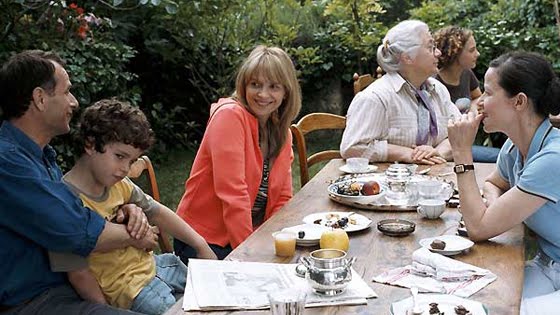
Helene has just turned seventy-five and has come to terms with the fact that her life is coming to an end. She takes her eldest child, Frederic aside and explains to him how the family’s vast art collection and the country home they grew up in is something she wants him to maintain and make sure her grandchildren can bring their children to. Helene dies soon after her children make their last visit to the house, all of them caught up in busy lives: Frederic in Paris, Adrienne in America, and Jeremie in China. Frederic comes together with the siblings who all want to sell off the artwork and the house as they don’t have the funds or time to maintain the property. Frederic concedes and they go about cataloging the contents of the home. Frederic maintains a sense of guilt as he watches the promise to his mother fade away.

Summer Hours is a film that will demonstrate how programmed you have become by cliched Hollywood plot devices. There is a never chance anything of major conflict with occur, no one is going to explode in an emotional rage and there will be no ironic twist of fate. This is a very relaxed film about a family and the compromises we all make as a part of families. Frederic never really puts up a fight and its hard to be angry at him. As much as his mother loved the collection her uncle had amassed and she inherited, it is almost impossible for her children to maintain it. What is interesting is how Frederic’s teenaged daughter, Sylvie feels a strong emotional connection to the country house. The opening scene is of her and her little cousins running through the woods, playing, being children. The final parallels this, but with a more bittersweet tone as it is the last time she will be there.

This is not a film that has a message for you. Assayas simply tells the story of these three adult siblings, lives without melodrama, dealing with the aftermath of the death of a parent. What you are meant to get out of the film is what ever you want. So often in American mainstream cinema scripts are locked into formulaic beats and its all about hitting certain plot notes by certain page numbers. Here no one is rushed along, no one reveals some deep dark secret. Its very refreshing, and beautiful, and ultimately stays with you a lot longer than a script that sloppily goes didactic. If you are looking for an incredibly thoughtful film that lets you decide what you want it to mean, then I think you’ll be in for a treat with this one.
Event Fatigue: The Thanos Imperative


The Thanos Imperative: Ignition
Written by Dan Abnett and Andy Lanning
Art by Brad Walker

The Thanos Imperative #1,2
Written by Dan Abnett and Andy Lanning
Art by Miguel Sepulveda

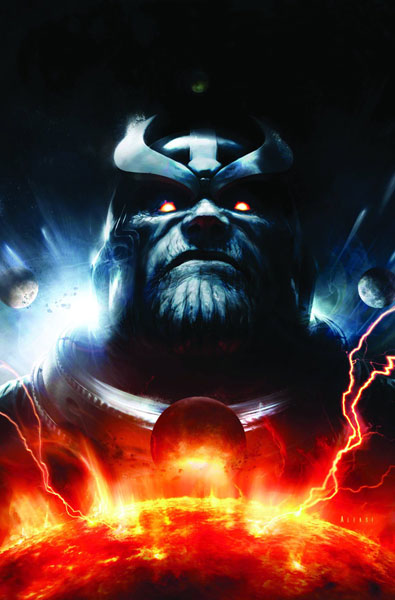
The year I really got into reading comics seriously (1991) was the same year Marvel released the epic mini-series The Infinity Gauntlet. At the time, it was just a really cool cosmic story with all the big Marvel superheroes (Spider-Man, Hulk, Captain America, etc.) battling a cosmic despot named Thanos who had gathered the Infinity Gems, jewels imbued with great power and sought to sacrifice existence to Death, his lover. He actually succeeded, destroying reality, with a few heroes saved inside a pocket with him. Captain America eventually got his hands on the Gauntlet and brought back all of creation and Thanos was exiled. For years since, Thanos has returned, seeking the sweet relief of Death, which is what he believes is perfection. About five years ago he was finally killed off, but it seems someone doesn’t want him to have the rest he craves.
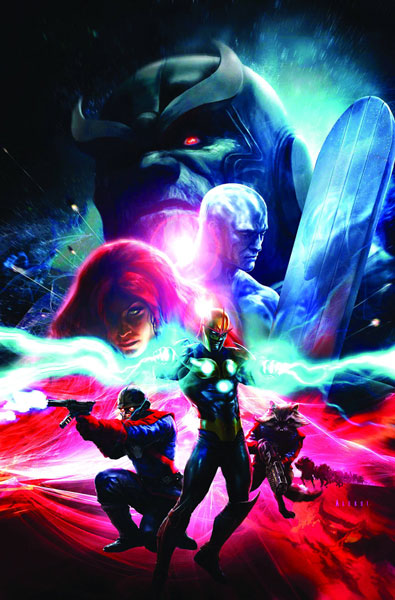
For the last six years, Dan Abnett and Andy Lanning have been redefining the cosmic elements of the Marvel Universe. Starting with a mini-event called Annhilation, they brought together The Silver Surfer, Thanos, Nova (think Marvel’s Green Lantern), and many more to tell a story that created a status quo for the space faring characters. Since then there have been two more Annhilation mini-series, a War of Kings storyline, and then a Realm of Kings storyline. It sounds like a lot, but instead of doing monthly series its all been pretty much contained to 3 to 6 issue minis. Along the way Nova has gotten his own ongoing, and some of the characters have assembled into a team known as The Guardians of the Galaxy, but its the sort of epic crossover event that isn’t taking up a billion titles and becoming too complex to follow. Abnett and Lanning really cut their teeth on handling a huge cast with DC Comics’ Legion of Super-Heroes in the 90s, a futuristic science fiction series featuring over two dozen adolescent metahumans and aliens. What they’re doing at Marvel is taking all these disparate elements that made up the cosmos and finding logical connections that make the whole thing much more cohesive.

Storywise things kicked off when the Inhumans, an earthbound race of people genetically modified by aliens decided to track down their creators and usurp them. Their creators were the Kree Empire, a militaristic society devastated during the aforementioned Annihilation storylines. The Inhuman leader Black Bolt took the throne of the Kree Empire and went to war with neighboring Sh’iar Empire. If you are familiar with your X-Men comics, you’ll know the Shi’ar are partially responsible for poor Jean Grey becoming the Phoenix. At this point in time, the Sh’iar were ruled by Vulcan aka Gabriel Summers, brother of Cyclops. Vulcan was a cruel leader and he and Black Bolt clashed in a epic battle that ended with them both dying and a tear forming in space. Over the next few months, both the Kree and Shi’ar dispatched vessels to probe this growing tear in space time and what they found was parallel universe where death no longer existed. Sounds good, right? Well, the way death was nullified appears to be through some sort of arcane pact with Lovecraftian elder gods. Now the forces of this parallel reality are swarming into the Marvel Universe attempting to “bless” them with undeath. When you have a character like Thanos who has a bizarre romantic relationship with the embodiment of Death there’s bound to be some conflict.

The first thing that stands out about the three pieces of these mini-series so far is the stellar artwork. There’s a two page spread in Thanos Imperative #2 that involves joined fleets of Kree, Shi’ar, other species, Galactus, The monolithic Celestials, and other cosmic beings battling the enemy fleet emerging from the tear in space. Its one of those moments where a still image is anything but static. Despite the lack of sound in real space, you can hear the unloading of thousands of laser cannons, energy blast explosions, and all out cosmic war. The Silver Surfer is drawn in a very interesting way as well by Sepulveda. He is almost featureless, his face simply a blank silver head and it really works. The effort has always been to humanize the Surfer but I like the idea of really making him alien and distant. The level of power he possess should eventually make him feel that he has little in common with mortals.

The series has shown great pacing and made its shocking reveals perfect. Every issue so far has ended on a well earned cliffhanger that’s making me chomp at the bit for the next issue. It was also a brilliant idea for the ongoing series of Nova and The Guardians of the Galaxy to go on hiatus till the end of this mini series. It helps avoid the glut of cross overs that fill space until we can get back to the core of the story. Because these are not core Marvel characters the stakes actually feel high. Reading an earthbound Marvel title, you know that Iron Man isn’t going die and that Spider-Man will make it out alive. With these characters you know its not beyond the possibility that they could die, that the heroes could lose. Because of the quality of work of Abnett and Lanning with the Marvel cosmic line so far I have huge confidence in this story to deliver. It’s definitely worth your time and puts a lot of summer blockbuster films to shame.

Hypothetical Film Festival – Brothers

It’s as simple as the title, films that have very prominent brother relationships at their core.


American History X (1998, dir. Tony Kaye)

Everyone remembers Edward Norton as the terrifying, swastika tattooed skinhead. The scene where he curbs a young black man who had broken into his house is gut wrenching. What’s interesting is how he so embodies evil in the flashbacks during the film, yet is an incredibly sympathetic character when reformed. His younger brother, played by Edward Furlong, is high school student struggling to understand how his older brother has turned his back on their family’s white power ways. In many ways the film is a race against time picture, Norton is desperately trying to get his little brother to stop being motivated through hate before something terrible happens to him.

Capturing the Friedmans (2003, dir. Andrew Jarecki)

In the 1980s, Arnold Friedman, a Long Island resident was arrested for possession of child pornography. As investigations continued police believe that Arnold and his son Jesse were sexually molesting students of private computer lessons they gave in the home. The two other sons in the family become strained as the family is marked as a pariah in the neighborhood. The evidence for the case is based entirely on the testimony of the students, and it could be interpreted that these confessions were encouraged by the authorities. But that doesn’t explain the magazines, or the overall strangeness of this family and these three brothers. A very disturbing film that, much like in real life, leaves you with a lot of answered questions.


Straw Dogs (1971, dir. Sam Peckinpah)

While the main plot concerns Dustin Hoffman and his British bride being plagued by the local thugs of her hometown, those thugs are brothers through their life together in this small village. In particular, David Warner as Henry Niles, a mentally handicapped man whom tags along with the boys in a major piece in the story. The film is violent and hard to watch. Hoffman basically cracks after being pushed too far by the thugs and precedes to murder them all. By the end of the film Hoffman has take Warner into his care, and Warner has shifted from being the brother of his villagers to a brother with Hoffman. His final line of the movie “I don’t know my way home” is incredibly poignant given the larger context of the film.


Mean Creek (2004, dir. Jacob Aaron Estes)

Mean Creek is a film about actors you are familiar with doing very dark things. Actors from Nickleodeon and Disney Channel shows are featured here as well as a Culkin brother. It seems Sam (Rory Culkin) is bullied endlessly by George (Josh Peck). Sam’s brother and his friends invite George out for a rafting trip with the intention of humiliating George on camera and then showing it to the kids at school. Things go wrong, someone dies, and the group are forced to deal with dark subjects you would never expect them to have to. A body has to be hidden, police have to be lied to, and their innocence is completely destroyed by the end of the film.


Before the Devil Knows You’re Dead (2007, dir. Sidney Lumet)

Phillip Seymour Hoffman and Ethan Hawke star as brothers whose choices have led them down some very sad paths. Hoffman is a successful investor who has been dipping in the company till to fund his drug habit. Hawke is divorced and estranged from his daughter, he needs money to prove he can share custody. Hoffman suggests they knock over their parent’s jewelry store, knowing that insurance will cover the losses. They send in a third party and things go very bad. The film is told out of sequence and it definitely works well. We see the heist, not knowing who any of these people are, then we jump back and see how it was put together. We see a funeral then we see the brothers hatching their plan. This is probably one of the darkest films about brotherhood and a criminally overlooked film from a master director.

Mature Reading: Sweet Tooth


Sweet Tooth #1-11
Written and Illustrated by Jeff Lemire

This blog is intended to be mostly for people unfamiliar with comic books and what’s out there. I know some friends who read Watchmen for a college English class or people who may not be up to date on the newer series out. For those of you not too up to date, DC Comics has an imprint called Vertigo which specializes in non-superhero fare aimed at adults or adolescents with literary maturity. Most of the time the series their present are great, a few seem to fall flat. Sweet Tooth is very much the former. It’s a post-apocalyptic story about mutants and survival and humanity becoming incredibly tribal. The art style increases the uneasy feeling you’re meant to have reading that this scary and violent world. And its all the work of Jeff Lemire, recently signed as an exclusive creator for DC Comics.

Gus is 9 years old and lives with Pa in the middle of the forest. He’s never left the forest and Pa has warned him that outside of it is all the evils in the world, and if Gus doesn’t want to go to Hell he’ll stay put. Then Pa dies and Gus is left alone in the world, slowly running out of food in their desolate cabin. Then one day some men enter the woods carrying guns, and when they see Gus they know they have found something special. You see, Gus has a pair of deer antler growing from his head. His mother died in childbirth and Pa ran away with Gus to keep him safe. The hunter surround the little boy but he is saved by Tommy, a lone mercenary who becomes Gus’ protector. The duo set off to a place Tommy says will be safe for Gus. Along the way they encounter roving bands of killers and thieves that populate the now devastated American Midwest.

Sweet Tooth is a slow burn, and its perfect that way. Almost one year in and we still know very little of the mystery behind Gus. We know that his mutation is one of many that occurred as a result of a virus that killed millions. All the children born in the wake of the virus had animal mutations. There’s even a brothel they run across where a few women dress in animal masks to satisfy the cravings of some of the more perverted clientèle. The environments in the comic are very wide and very open, because its the Midwest it was already like that, but the apocalyptic air increases it a million times.

The artwork in Sweet Tooth is incredibly aesthetically inventive. In one of the more recent issues, Gus is put under hypnosis to pull out his memories of his life in the woods. The way Lemire stages is this is by miniature versions of Gus and the hypnotist walking along the full size Gus’ head, crawling into and out of his ears. It runs through the entire issue and is just one example of the creativity and interesting storytelling at work. This is a very easy one to get caught up on. Only two collections out right now so you could be ready to follow it month to month by catching up in day. A series that I am looking forward to seeing where it goes.

Event Fatigue: Shadowland


Shadowland #1
Written by Andy Diggle
Art by Billy Tan

Daredevil #508
Written by Andy Diggle and Antony Johnston
Art by Robert de la Torre

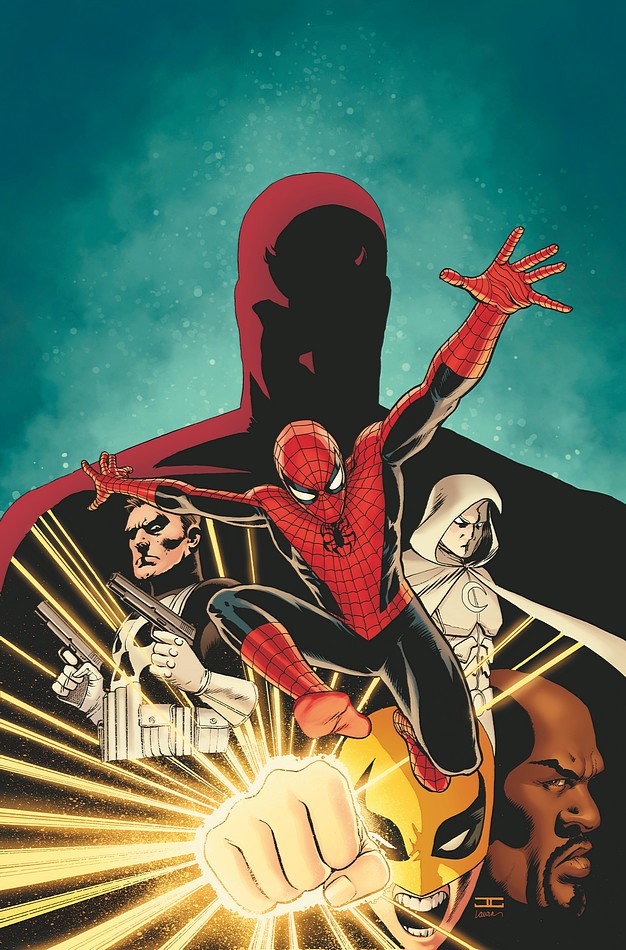
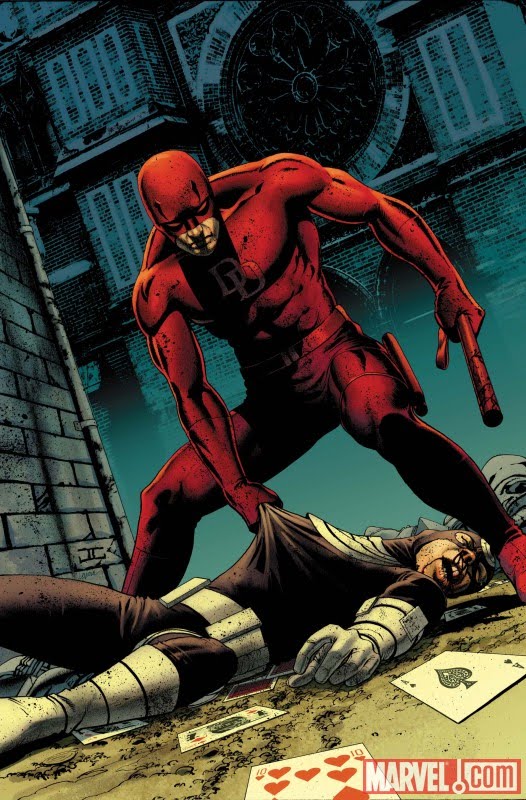
A few months ago if you had told me I would be excited to read the new issues of Daredevil I would have said you were nuts. Daredevil has been one of those characters that never clicked with me, not even the critically acclaimed Frank Miller run or Bendis’ over 100 issues on the series. Blind lawyer vigilante just never appealed. However, Andy Diggle’s current run on the character seems like a shift towards a very interesting change in the fundamental aspects of Daredevil. The once by the books lawyer has abandonded the law in favor of pure street justice and has walled in Hell’s Kitchen, turning into Shadowland, his realm under his protection. And those who get in his way will die.

It began with Norman Osborn. The former Green Goblin assumed control of America’s top security forces after saving the world from an alien invasion and some epic PR. Put in charge of SHIELD, renamed HAMMER, Osborn set out to turn New York’s heroes into criminals in the eyes of the public. HAMMER agents were told to target an tenement in Hell’s Kitchen labeled as a hiding place of the notorious ninja clan known as The Hand. The building was firebombed and 100 innocent people were killed. Daredevil blamed himself for not being able to protect his fellow residents of the Kitchen and pledged himself to The Hand, his long time enemies. They promoted him to the leader of the clan, over all else, and along with his lieutenants Black Tarantula and White Tiger they drove the NYPD from his kingdom. Unbeknownst to Daredevil, the other leadership in The Hand are pushing him down this path in an effort to unleash a level of power their group has never experienced. In the background Wilson Fisk, the Kingpin is slowly reassembling his crime cartel after being released from a long stay in prison.

The events of these first two parts finds Luke Cage and Iron Fist, two fellow street level heroes venturing into Shadowland to talk to Daredevil, who has distanced himself in the preceding months. What they find is that he is unwelcoming to any interference. Just around this time, Daredevil’s arch nemesis Bullseye arrives, newly escaped from a prison transport. How Daredevil deals with his longtime enemy shows Cage and Iron Fist just how different their old friend is. Foggy Nelson, Daredevil’s former law partner and Dakota North, a private eye and former lover of Daredevil, drive to the borders of Shadowland but are stopped by White Tiger and some Hand agents. As the two leave they are attacked and their card explodes due to a masked archer on the rooftops. Needless to say things are getting worse and worse in Hell’s Kitchen.

The idea of making Daredevil a villainous figure is very intriguing to me, and the main reason I have started reading this current run of the series. The blind superhero part of Daredevil/Matt Murdock has always been a yawn for me. What is more interesting is the fact that he is/was a lawyer. How does a man who has devoted himself to the law justify vigilantism to himself. The Shadowland story is revealing how years of tragedy (the murders of Elektra and Karen Page first and foremost) have scarred Murdock. The embrace of some of his worst enemies in The Hand, while pushing away his closest friends marks a major change in the psyche of the character. This is one of those character arcs that you can’t see them coming away from the same every again. In many ways this is probably as close as we would get to a storyline where Batman takes over the Gotham crime families, a story that would be amazing.

Next up: Shadowland #2 in August!

Review: Justice League: Generation Lost #1-5


Justice League: Generation Lost #1-5
Script by Judd Winick, Breakdowns by Keith Giffen
Art by Aaron Lopresti (1,5), Joe Bennett (2,4), Fernando Dagnino (3)

When I was eight I met a Justice League that was a complete stranger to me. I grew up watching the Super Friends and from what I could tell they were the Justice League also. Imagine my surprise when I picked up Justice League America #42 and found characters like Blue Beetle, The Huntress, and Mister Miracle among others. Even though these were not the people I was expecting, I was intrigued. Later, in my first two years of college I was able to track down a complete run of this Justice League through dollar boxes, all sixty issues of Keith Giffen and J.M. DeMatteis’ Justice League/International/America. The series went through some title changes but it was always the League to me. DC has recently gotten this ragtag group of heroes back together again for a bi-weekly 26 issues series that has their former benefactor leading them on a global wild goose chase. So how do the first five issues bode for the series so far?

Once upon a time, a wealthy businessman named Maxwell Lord assembled a group of heroes and formed the new Justice League. There was no Superman or Wonder Woman. Batman was there, albeit briefly. Instead the core of the group were the following characters:
Blue Beetle – computer whiz Ted Kord and the second man to go by the Blue Beetle identity
Booster Gold – visitor from the 25th Century attempting to get rich quick using future tech as a hero
Fire – A Brazilian who could turn herself into a pillar of green fire
Ice – A Scandinavian woman who could turn water molecules in the air to ice
Captain Atom – a jarhead turned living nuclear bomb due to a botched test bombing
Rocket Red – an armor clad Russian with a rather easy disposition

Maxwell went a little evil, ended up trying to kill earth’s heroes, and Wonder Woman was forced to kill him. But, as is the way in the world of comics, the dead don’t stay dead. Max was resurrected during one of those big cross company events and immediately set about causing trouble. Max had an ability to manipulate the minds of others and now he knew he would be the most hunted man alive. Using considerable effort and straining his body beyond its natural limits, Max erased his memory from the mind of almost every living being on earth, except for his old Justice League crew. Now they are hunting him down, with the world around them believing they are crazy, attempt to stop Max before accomplishes what ever it is he’s up to now.

So far the first five issues have had their ups and downs. While DC brought back the original plotter of this Justice League, Keith Giffen, they paired him with Judd Winick, a writer whose work is some of my least favorite ever put to paper. Winick has a very grating way of writing and is not very good when it comes to handling action. Shouldn’t be a problem with a Justice League that was always more about the humor than the action. Once again he fails, nothing is funny and the characters are way too serious. The thing that always drew me to the Giffen/DeMatteis League was that unlike the Silver Age goofy JLA or the cosmic trippy Morrison JLA, theirs felt like people having fun. Blue Beetle and Booster Gold are my all-time favorite comic book duo. It was like a great comedy team and super heroes rolled into one. They frequently used Max’s funds to invest in get rick quick schemes or antagonized the team’s token Green Lantern, Guy Gardner. Now Ted Kord is dead and replaced with Jaime Reyes, the new Blue Beetle. He’s an equally interesting character but there is something lost in the dynamic.

Because of the extended 26 issue story these first five feel like nothing has happened, and really it hasn’t. We’ve seen the characters assemble and some battles that seemed very pointless occur. The only part you could really call plot development would be that the heroes have realized Max has manipulated them into reuniting and that Max seems to have some unwanted side affects to his resurrection. The artwork is also back and forth, as to be expected in a series that comes out more than once a month. Three artists have been employed rotating, the best of which has been Aaron Lopresti on the first and most recent issues. He just a cleaner, more detailed style than the other two. What’s impressive is that DC’s last foray into publishing a title more than once a month was Trinity, a 52 issue weekly series with Mark Bagley handling art on every single issue without a miss. And it was better than this series, which has multiple hands to choose from.

Overall, my excitement for this series before it was released has really waned. You’d be better off checking out the collected volumes of Giffen and DeMatteis’ original Justice League run which is up to four volumes so far. Here’s hoping The Lost Generation can pick momentum in the next twenty-one issues.

Newbie Wednesdays – Greenberg


Greenberg (2010, dir. Noah Baumbach)
Starring Ben Stiller, Greta Gerwig, Rhys Ifans, Mark Duplass, Jennifer Jason Leigh

Hey, you know what isn’t an interesting topic for contemporary cinema right now? Angst ridden white people who live comfortably and don’t have to worry about any necessities. Especially when they aren’t in some sort of hyper-realistic universe (i.e. James Bond, comic book movies). When the films are meant to be set in reality and feature characters whose biggest problems are that their band when they were in their twenties didn’t work out, yet are still rich through other endeavors, then I don’t really have much empathy towards them. This is yet another hugely pretentious piece of cinema from the grating Noam Baumbach. If you’re interested in navel gazing claptrap you’ve found your film.

Florence (Gerwig) is the personal assistant to the Greenberg family, a wealthy couple with two kids and a dog. The Greenbergs are off to Vietnam to open one of the husband’s hotels and they let Florence know his brother, Roger will be visiting for a few weeks while they are gone. Roger had a nervous breakdown and is coming the mansion to relax and work a doghouse. Roger and Florence meet, and she inexplicably ends up liking him. She learns Roger was involved with a semi-successful band in the 80s and they would have made it big if Roger hadn’t freaked out and left. Roger runs into some of his old bandmates (Ifans, Duplass) and while one of them has gotten over it, the other still holds a grudge.

The character of Greenberg is not necessarily a bad concept. I think everyone enjoys a good curmudgeon every once and awhile. But the curmudgeonly attributes of Roger Greenberg come across as cliche and totally dishonest. It doesn’t help that Noah Baumbach is doing what he did in Margo at the Wedding, one of the least watchable films I’ve ever had the privilege of falling asleep during. This is film straining desperately to be so clever and erudite, yet maintain that angst white middle class tone I hate. While some people have the same things to say about Wes Anderson’s films, I argue that Anderson works his damnedest to make his work feel intentionally separate from reality, in effect making contemporary fairy tales. Baumbach thinks he’s making a movie grounded in realism, and I guess for self-absorbed upper middle class people it probably is. I just have zero sympathy who have these problems.

There are few moments of good in it. I think Greta Gerwig is a great actress, more so in more mumblecore type movies than this one. She has a very natural ease in front of the camera and is one of the few people in the movie who doesn’t feel like she is acting. There’s a sub plot involving her ex-boyfriend that I found to be good to see in a film, its something that never really happens even in movies, and if it does there seems to be some moral cultural obligation to make it a big deal. Here Gerwig simply does this thing and everyone moves on with their lives, the way in reality it would probably be. Many of the supporting players are quite good, with the exception of Jennifer Jason Leigh as Roger’s ex from back in the band days. Leigh is also the co-screenwriter, producer, and the wife of Noah Baumbach. She’s just not very good in this role. If you have the option to watch this film, I can’t really say its one of those worth one view ones. It really isn’t, it doesn’t say anything of importance, it doesn’t work to achieve any interesting artistic aesthetic, it is just simply nothing.

Review: Batman #701 and Batman and Robin #13

Batman #701 and Batman and Robin #13
Written by Grant Morrison, Art by Tony Daniel (Batman), Frazier Irving (Batman and Robin)

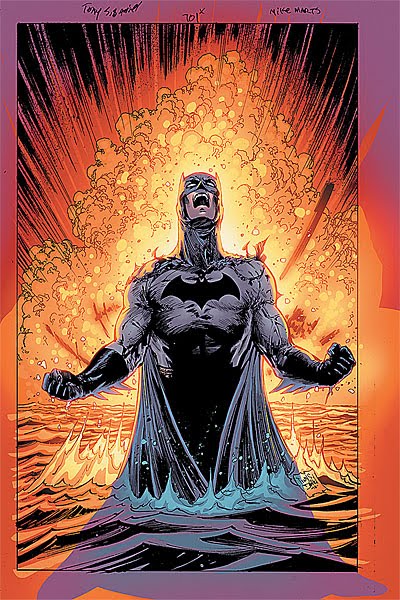
For those of you not keeping up with Batman currently, here’s the score: Over a year ago, Batman was driven to madness by a group called The Black Glove, led by the mysterious Doctor Hurt. Hurt claimed to Batman’s believed dead father, and buzz swept through Gotham that Thomas Wayne never died and had paid the gunman to kill his wife. Batman regained his senses after being put through a psychological gauntlet and both he and Hurt plunged into the bay surrounding Gotham while onboard a helicopter. Batman emerged from the water and Hurt disappeared. Some time later, Bats got involved with Final Crisis, one of those big cross company events where all the heroes show up. He sacrificed himself to stop the mini-series’ villain and the first Robin, Dick Grayson is now wearing the mantle of the Bat. Batman #701 features the first of two parts of writer Grant Morrison filling in the gaps between Batman’s battle with Doctor Hurt and his death in Final Crisis. In Batman and Robin #13, Morrison is setting up the inevitable return of Bruce Wayne with Doctor Hurt attacking the new Batman.

Grant Morrison is my favorite comic book writer and also the one who frustrates me to no end on everything he writes. Morrison goes against the current trend in comics writing which is decompression (i.e. stretching out an event with endless scenes of the heroes gathered together discussing what they are going to and what has just happened). While tells multi-part stories, they feel jam packed with things happening. It may not be traditional action, but you will have a handful of concepts and ideas thrown at you in a single issue that keep you thinking for a whole month till the next handful. And, when I first heard he was signed to write the core Batman title back in 2006, I was a little worried. Morrison’s focus had always been on established heroes or original ideas that contained a hint of the cosmic, and Batman never really seemed to be one of those titles.

But he has pulled off in a spectacular way, referencing some of the reviled “science fiction” Batman stories from the 1950s and incorporating them into the modern interpretation beautifully. He’s also managed to tweak the Joker in a way that has really injected that character with life. What Morrison up to is a reinventing of the character, in the same way that Batman was reinvented in 1950s, 1960s, and 1970s. The 1970s brought us the Dark Knight concept which has remained the way most writers have tackled the character until Morrison. His story this in this month’s Batman is interesting and definitely written as a “fill in the gaps” type arc. Batman comes to the surface of the bay, makes his way back the manor, eventually returns to find Hurt’s body is now missing, then gets brought into the events of Final Crisis. All along the way, he’s fixated on Doctor Hurt’s last words, that the next time Batman wears the cape and cowl it will be his last. Throughout the issue he goes unmasked, with that prophecy looming in his mind. And this first part ends with him putting it on for what we the readers know is the case he dies on.

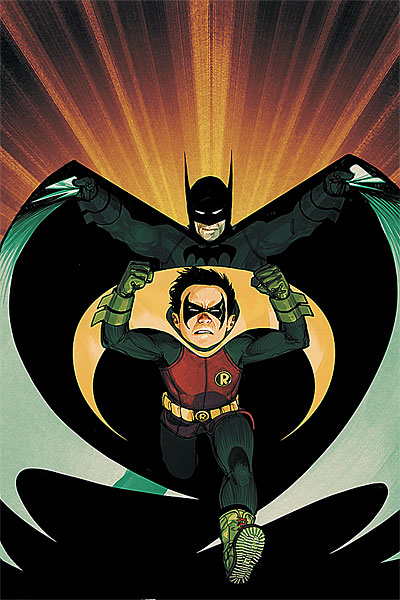
In Batman and Robin, we’re giving a series of enigmatic panels showing the murder of the Waynes, then a panel where Thomas stands over the bodies of Martha and Bruce. Then Doctor Hurt wearing a Bat costume that Thomas Wayne once wore for Halloween, and would inspire Bruce as an adult. This jumps to three days in the future, where Hurt has Batman (Dick Grayson) and Robin (Bruce’s illegitimate son Damien Wayne) being held captive. He tells Dick that this new Batman could never beat a Wayne and shoots him point blank in the back of the head. Then we jump back three days to where the core story is told. Batman and Robin are interrogating the Joker, who has turned up disguised as a famous British crime author to help bring the original Batman back from the dead. Batman is called away and core of the issue deals with Damien Wayne revealing his true brutal colors by sneaking a crowbar in to beat the Joker to death. Batman and Commissioner Gordon investigate crimes related to the original Batman’s death and it appears that Doctor Hurt is back from the dead.

Both issues set up some intriguing hooks, though Batman and Robin for me has been flawless its entire first year. Every issue builds on the next and its just one of those I have to read as soon as it comes out. Art wise, Batman and Robin is also the stronger of the two. Frazier Irving has come onboard as the new artist and he’s do something amazing things using shadows and has such a clean European style of drawing. Tony Daniel is much more from the Image Comics school of drawing, that early 90s Marvel influenced work that has never cut for me, even as a kid. Morrison’s work has been excellent on the Batman books and these are strong evidence that it is going to continue.

Comics I’m Getting This Week

BOOM! Studios
Calling Cthulhu: Chronicles #1

Dark Horse
Doctor Solar, Man of the Atom #1

DC Comics
Adventure Comics #516
Batgirl #12
Batman #701
Birds of Prey #3
Booster Gold #34
The Brave and the Bold #35
Doc Savage #4
Justice League: Generation Lost #5
Magog #11
The Mighty Crusaders #1 (of 6)
R.E.B.E.L.S. #18
Superman #701
Titans #25

IDW
Locke and Key: Crown of Shadows #6

Image
The Bulletproof Coffin #2 (of 6)
Chew #12

Marvel
Amazing Spider-Man #637
Astonishing Spider-Man/Wolverine #2$
Avengers Academy #2
Daredevil #508
Deadpool Corps #4
Girl Comics #3 (of 3)
Gorilla Man #1 (of 3)
Invincible Iron Man #28
Iron Man Noir #4 (of 4)
The Thanos Imperative #2 (of 6)
Ultimate Comics: Spider-Man #12
Uncanny X-Men #1: Heroic Age (One-Shot)
X-Force: Sex and Violence #1 (of 3)
X-Men: Hellbound #3 (of 3)
X-Men: Second Coming #2

Vertigo
Daytripper #8 (of 10)
DMZ #55
The Unwritten #15

Wildstorm
Astro City: Silver Agent #1 (of 2)
The Authority: The Lost Year #10 (of 12)
The X-Files/30 Days of Night #1 (of 6)