Jolly Good Thursdays – Peeping Tom


Peeping Tom (1960, dir. Michael Powell)

Starring Karlheinz Bohm, Moira Shearer, Anne Massey

Released the same year as Hitchock’s Psycho, critically panned in Britain, pulled from theaters after an incredibly short run, and reviled by its director, Michael Powell. Peeping Tom sounds like it should have been forgotten. However, the film was years ahead of its time and is a masterful piece of commentary on voyeurism and the film audience. Infamous for containing the first nudity in British cinema (a nude model’s bare breasts are glimpsed for a couple seconds), but is about much more than seedy exploitation.

Mark Lewis is film studio cameraman by day, with side job taking nudie pictures for a corner newsagent. What no one knows is ,that from time to time, Mark takes to the streets with his camera and films the faces of women he murders. This is the result of a psychologist father who experimented on the compulsion people have to gaze, or be a peeping tom, on his own son. He fetishistically films young Mark, waking him up in the middle of the night by tossing a lizard in his bed or making him listen to the sounds of women being murdered. Now, with Mark alone in the world he has been lost in the damaged inflicted on him. He befriends a young boarder in his large mansion and fights his urges to make her gaze into the camera.

Peeping Tom  has some very clever camera play, especially during the murders where we see everything through Mark’s camera. And it does a very effective job of getting across the seediness of the world Mark inhabits. At the photo shoot over the newsagent’s shop, one model complains that Mark needs to hide her bruises from the camera, while another is frightened of people seeing her harelip. Powell creates exterior, physical deformities to emphasize the corruption infesting Mark. Are these women truly this scarred? Or it a manifestation of Mark’s psychosis?

One of the most interesting aspects of the film is, that despite Powell’s dislike of the picture, he weaves himself so personally into it. He plays young Mark’s father in old reel to reel footage, cast his own son as young Mark, and his own wife as the body of Mark’s lifeless mother in a funeral scene. In addition, the most elaborate murder is performed on actress Moira Shearer, famous as the prima ballerina in The Red Shoes. Powell and Shearer reportedly could not stand each other, he viewed her as an “airhead”. The film Mark is working on involves a director struggling with a red-headed flighty actress he is having to do retakes of constantly. In addition, Shearer plays the younger actress’ stand-in and is presented as an aging actress on her way out. A rather cruel, yet clever, way of Powell addressing his own problems in cinema.

Hypothetical Film Festival #9 – The Luck of the Irish

In honor of St. Patrick’s Day, here is a film festival in celebration of the Irish people:


Darby O’Gill and the Little People (1959, dir. Robert Stevenson)

Starring Sean Connery
A very overlooked Disney film that is absolutely amazing! Crazed ol’ Darby O’Gill claims to have seen and even stolen the gold of the Leprechauns. His daughter is embarrassed by his reputation as a crazy drunk. That is, until the day she sees the Leprechauns too. I remember loving this film as a child and being terrified out of my mind when the evil banshee makes her appearance. Darby O’Gill is notable for being the film that brought young Sean Connery to the attention of producer Robert Broccoli, who was having a difficult time of casting the role of James Bond in Dr. No.


In the Name of the Father (1993, dir. Jim Sheridan)

Starring Daniel Day-Lewis, Pete Postlethwaite, Emma Thompson
Based on the true story of an thief in Northern Ireland who is wrongly accused of being part of an IRA bombing of a London pub. Gerry Conlon (Day-Lewis) and his friends are beaten into confessions and spend the next 15 years in prison, while on the outside, Gerry’s father (Postlethwaite) with their lawyer (Thompson) fight vigorously to free him. This is one of the great pieces of contemporary Irish cinema by one of the greatest Irish directors there has ever been.


The Magdalene Sisters (2002, dir. Peter Mullan)

Starring Anne-Marie Duff, Nora Jane Noone, Dorothy Duff
For almost 200 years, the Catholic Church ran the Magdalene Asylums throughout Ireland, where young women who had had sex out of wedlock, were working as prostitutes, or simply victims of rape were sent because they were “unclean”. This film focuses on three teenaged girls sent to one of these places where they are forced into slave labor through laundry work, one hundred percent of the profit being kept by the nuns that run the facility. This a heartbreaking film about the dehumanizing being done by religious institutions to people who already brutally victimized.


Breakfast on Pluto (2005, dir. Neil Jordan)

Starring Cillian Murphy, Liam Neeson, Stephen Rea, Brendan Gleeson
This wonderful modern fairy tale, tells the story of Kitten Braden (Murphy), a young cross-dressing Irishman who goes on a picaresque journey through his homeland and onto London in a quest to find his long lost mother. This is one of the greatest achievements of prolific director Jordan, whose name is synonymous with Irish film. The picture touts a brilliant soundtrack of period music and some amazing visuals. Cillian Murphy is amazing and completely becomes his character, one of those few actors I do forget is in there when he is performing.


I Sell the Dead (2008, dir. Glenn McQuaid)

Starring Dominic Monaghan, Ron Perlman, Larry Fessenden, Angus Scrimm
A very overlooked picture that is both a comedy and mix of horror and sci-fi all wrapped up in an Irish package. Dominic Monaghan is a grave robber in the late 19th century whose partner finds a body they believe is a circus freak’s. To the modern audience we recognize it as an space alien. The alien body has the effect of resurrecting the dead and soon there are reports of zombies plaguing the countryside. This is not just a horror-comedy in name only, but a legitimately funny film that shows a real love for classic cult horror like Evil Dead.

Newbie Wednesday – The Men Who Stare At Goats


The Men Who Stare at Goats (2009, dir. Grant Heslov)

Starring Ewan McGregor, George Clooney, Jeff Bridges, Kevin Spacey, Stephen Lang
If you remember the jokingly done reports in the media about prisoners of war in Iraq being exposed to Barney the Dinosaur’s “I Love You” song on a loop, then you have already heard of the writing of reporter Bob Wilton. In a mix of fantasy and reality we get this very suspect account of a secret unit of the U.S. Army, in operation since the Vietnam War. Director Heslov doesn’t deliver a film of any great magnitude, it has its moments, and we end up with a very quirky, very uneven comedy.
Bob Wilton is an Ann Arbor, MI reporter who ends up just outside of Iraq as the war is breaking out. Months earlier he interviewed an odd man who claimed to have been a psychic in the employ of the Army. By chance, Wilton runs in Lyn Cassady (Clooney), the man the interviewee claimed had been the best in their unit. Wilton and Lyn begin a strange journey across Iraq that ends with figures from Lyn’s past reappearing and culminating in an LSD fueled finale.
Jeff Bridges plays a ultra hippie, Bill Django, the founder of the New Earth Army, the unit devoted to using peace and love to combat enemy troops. A lot of these ideas won’t seem far fetched if you know anything about the experimentation the military has done on the paranormal for combat purposes. The film even brings up the infamous MKULTRA experiments done by the CIA on soldiers and civilians alike, where psychotropic drugs were added to water without the subjects’ knowledge and their reactions were recorded.
I never found myself laughing during this film, a few grins here and there, but was never really impressed with anything I saw. The film seems to not know what it wants to be: a satire of the army, a satire of the new age movement, a commentary on the absurdity of this current and all war. Because of this lack of a “thesis statement” the film seems to wander aimlessly with no point at the end. Coupled with very amateurish voice over (a big no-no unless you know how to do it right) and an original score that felt cheap, its a film that could easily be missed without regret.

Wild Card Tuesday – Hunger


Hunger (2008, dir. Steve McQueen)

Starring Michael Fassbender, Liam Cunningham
The fight between Catholic and Protestant sides in Northern Ireland has devastated that country since the late 1960s. Each side has visited monolithic brutality on the other in of the greatest displays of community inflicting such cruelty on itself. But the cruelty that was the worst, was that of employees of the British empire on IRA members imprisoned in facilities across the country. Director Steve McQueen never give support for the terrorist actions of the IRA, but advocates that all prisoners, regardless of their crimes, deserve humane treatment.
The film’s focus is real life IRA soldier Bobby Sands (Fassbender). While the film doesn’t explicitly cover his activities with the IRA, he was no saint. He helped ferry weapons for the movement and was involved in the bombing of a furniture store in 1976. The film chooses to portray Sands as a figure unwilling to budge an inch for the brutal authority crashing down around his head. In this effort he has allowed himself to become dehumanized. Simply put, he has been caged and treated like an animal, so he will behave like one. Sands smears the walls of his cell with his own feces, allows the daily meals to rot and mold in a corner, and funnels his bed pan (synchronized with the other prisoners) out into the hallway. Is it vile? Yes. But there something innate within us that despise authority that wishes to break us, so it comes off as bizarrely admirable.
Bobby’s most memorable, and final, triumph came when he began a hunger strike in 1981 which took his life after several painful months of starvation. Michael Fassbender destroyed his body through malnutrition to take on the gaunt, sunken appearance of a Holocaust victim. He become the specter of death with additional help from an incredibly talented makeup department. His back is covered in open sores, he’s unable to urinate for the prison doctor’s physical, and he stains his sheets with black, acrid blood. The moments before Sands passes are truly powerful. The film moves into his consciousness as hallucinations of his younger self appear and his mind travels back to long distance race where he and both Prot and Catholic youths ran together, in fields of golden amber. Director McQueen doesn’t want you to take the IRA’s side, he wants you to realize how irrelevant any side is, and simply see a man dying.
The aesthetic choice made by McQueen are magnificent. For the first 30 minutes of the film there is little or no dialogue. Only 50 minutes in is there an actual conversation between two people for extended amount of time. Here Sands and a priest from his community debate the point of standing in defiance of authority. The priest tells Sands he must submit to the uniform being enforced on the prisoners and Sands simply won’t budge. Once again, neither side wins in the debate. They simply come to the conclusion that neither of them will change their ideas about it. Hunger is one of the best examples of director using the language of cinema to tell a visceral and moving story. There is no maudlin sentimentality, yet there is a deep emotional core. Not for those lacking a strong constitution, but one of the most amazing British films I’ve ever seen.

DocuMondays – What Would Jesus Buy?


What Would Jesus Buy? (2007, dir. Rob VanAlkemade)

Starring Reverend Billy and the Church of Stop Shopping Gospel Choir
There’s a huge problem going on in America and it is known as the Shopocalypse, can I get a Change-alujah?! This is the message being preached by faux-preacher/political theater activist Reverend Billy Talen. Now, with his Church of Stop Shopping, he is touring the country promoting the idea of thoughtful consumerism, wherein we make choices based on where products were made and their actual usefulness. During this outing, the group traveled from the East Coast to Disney Land over the Christmas Holiday spreading their message.
I loved much of the the concept of this documentary, however, it has a problem I find common in issue films of this nature. It presents the problem very well, and I am on board with that, but it never really offers a strong solution and seems to wander too much. The filmmaker seems unsatisfied with simply focusing on Reverend Billy or actually taking piece of his “sermons” and expanding on them Super Size Me Style. In that film, Morgan Spurlock would take an idea (children’s nutrition, usage of sugar) have his bit relating to it in his experiment and then expand upon it with interview of experts and people suffering from the after effects of a process food product. There are moments that come close to that here, but ultimately fall flat.
The film hits the targets you would expect it to: Wal-Mart, Disney, Starbucks. And the bizarre sermons are quite humorous. What the film needed was a strong grounding in anti-consumption message with statistics. It needed to hit three areas strongly: Pollution, Conditions in Third World Countries, and Long-Term Economic effects of spending. The director grazes these ideas so briefly that he shouldn’t have even bothered. It’s interesting how violent authorities become when Reverend Billy and his crew start talking about people ending their unchecked spending. Before anyone is aware of their message, most people seem confused and bit amused. Once the sermons about not giving into the Want impulses drilled into your brains, the security guards and police show up and become quite rough.
Because of the title, I think the film should have centered on rabid consumption juxtaposed against the teachings of Jesus. Once, he’s mentioned in a very interesting way by a question of when was the only time Jesus became violent. The answer being in the Temple when he saw the money changers and lenders. I found it interesting that I had never contemplated his one act of aggression coming towards others in relation to people seeking to profit off of others and using the religion to do so. What Would Jesus Buy? is an interesting film, but remains constantly on the surface and never tries to breakthrough.

Maybe Sundays – Alice in Wonderland (2010)


Alice in Wonderland (2010, dir. Tim Burton)

Starrin Mia Wasikowska, Johnny Depp, Helena Bonham Carter, Anne Hathaway, Crispin Glover, Matt Lucas, Stephen Fry, Michael Sheen, Alan Rickman
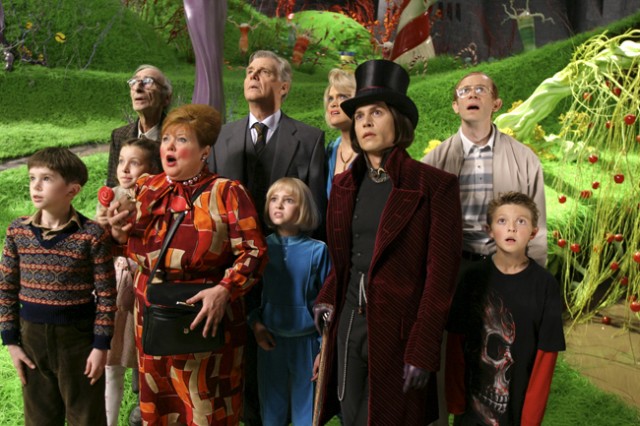
So visionary director Tim Burton takes on the classic surreal children’s tale of Alice’s Adventures in Wonderland with Johnny Depp at his side as The Mad Hatter. Sounds like a formula for success, right. Well, if this had been 10 years ago, maybe. However, with Burton’s work output in the 21st Century being less than stellar and lot of the visual tricks used here being old hat from previous films, the picture comes off an a utter bore. And I really didn’t want it to be.
Alice Kingsley is a teenaged girl being married off to a disgusting noble. During the engagement party she runs off and comes across a White Rabbit, whom she follows down a mysterious hole. Alice finds herself in Wonderland and the creatures there recognizing her as a prophesied savior. The two monarchs, Red Queen and White Queen and Alice is needed to defeat the evil Jabberwocky and save the day. The film is a mishmash of elements from Lewis Carroll’s two Alice tales and the 1951 Disney animated feature. And it all adds up to an uninteresting mess.
None of the Wonderland characters feel interesting in the least. Yes, they are strange and meticulously designed, but beyond their quirks they lack anything remotely resembling personality. This shouldn’t be a problem in a film based on a novel that really has no character development in the first place, and is merely a series of absurdity philosophical encounters. But, Burton has chosen to make the film a semi-sequel…or is it a reimagining? I couldn’t figure that out how they fit in with the original story. There are hints that this Alice could be the little girl from the story, but then there is a mention of Alice merely being some sort of title.
This is such a huge disappointment, especially with the exceptional cast gathered by Burton. Instead of giving us some new and interesting look at Wonderland, we get it blandly Burton-ized, with the typical spiral patterns and zany color schemes. Its nice decoration, but a great film it does not make. What the film misses are the more interesting goings on of the real world. I found myself paying more attention during the moments where Alice navigates her engagement party and, when she returns from Wonderland, and sets things straight with the people around her. I want to see a movie about THAT Alice!

Seventies Saturdays – Johnny Got His Gun


Johnny Got His Gun (1971, dir. Dalton Trumbo)

Starring Timothy Bottoms, Jason Robards, Donald Sutherland
Here we have a film directed by the author of the novel on which is based. This author, Dalton Trumbo was investigated by the FBI as a result of the novel’s publication, and later blacklisted during the McCarthy Communist witch hunt. While blacklisted, he was given his widest recognition as the screenwriter of Stanley Kubrick’s Spartacus. And it was during the twilight of the Vietnam War he decided to adapt his controversial novel. While on the surface, the film is condemnation of war by how it treats the men on the frontlines, Trumbo is expanding his theme to comment on the fragility of life and man’s right to die with dignity.
Joe Bonham (Bottoms) is introduced as a body under a sheet. He’s not dead, but was shredded by shrapnel from a mortar shell fired on the last day of World War I. The doctors maintain an unrealistically upbeat outlook and have Joe put in a utility room so as not to upset the other wounded men. We learn who Joe is through the meanderings of his consciousness now in this eternally paralyzed state. The horror of Joe’s condition is unfolded to us gradually: first they take his arms, then his legs, ultimately he learns his face has been scooped out. All that exists is a screaming mind in a paralyzed frame.
As Joe tries to make sense of this in his mind, he returns to moments with his late father (Robards) and consults with a Jesus of his own invention (Sutherland). His memories begin as real events in his past and morph into surreal fantasies about his loss. One of the most touching moments of the film comes early on. On Joe’s last night before shipping out, he and his teenaged girlfriend decide to have sex for the first time. This scene is played with such beauty and tenderness. Every nervous movement is captured perfectly, and the scene aches with a bittersweet sense of how these characters are experiencing such great joy, a joy that inevitably will die.
The genius of the film is that it never takes political sides. In essence, it truly supports the troops, because it is all about them. Joe is a child who was sent off by old men who use their children to fight wars. He did his duty and suffered great wounds. And now, with no future besides being a lump of meat locked in a closet, he is denied a basic right to have his life ended. Joe eventually figures out a means of communicating with those around him, only to find his new voice stifled and the realization that the people around Joe, because of their own fears of death, want to simply forget that he ever existed.

Import Fridays – The White Ribbon


The White Ribbon (2009, dir. Michael Haneke)

Cruel parents create cruel children. That is the moral of Austrian director Michael Haneke’s latest film, The White Ribbon. The object of the title is a device used as part of a technique implemented by the village minister to remind his children of purity. It’s no coincidence that children in a German village, whom will be adults when the rise of the Nazi party occurs, are shown wearing white armbands symbolizing purity. Haneke is not at work to simply tell the story of the psychological birth of the Nazi movement, rather he want to study and dissect what motivates terrorists and those who kill from a nationalist motivation.
In a small northern German village, about a year before World War I begins, a series of premeditated attacks occur. What sets things off is when the village doctor is thrown from his horse as the result of an near invisible wire strung across his property. Authorities find the wire vanishes over night and no one saw anybody tie it up there. The film is very fragmented and jumping from household to household, focusing on the interactions of parents and children. Like most Haneke films, he keeps things very ambiguous. He knows what to state outright and what to hint at.
Someone burns down a barn. A child is murdered. Another child is beaten severely and strung up in the town’s sawmill. I was reminded of Haneke’s 2005 picture, Cache, where the protagonist is presented with a mystery of someone filming the exterior of his flat for hours and hours, then mailing him the tape. Haneke cultivates mystery, presents us with plausible suspects, and then ends the film. A very similar technique is used here, so if you are someone who likes things wrapped neatly, this isn’t a film for you. However, if you enjoy philosophically contemplating the nature of evil and acts of tragedy visited on seemingly normal, undeserving people this is a fascinating picture.
German society at this time lives and dies on hierarchy and adherence to strict religious and moral tenets. In life you serve the land baron and thresh his fields, you go to church, and you never step out of place. So, for such chaotic acts to begin in the village is a cause for the erosion of propriety. As Haneke peers under the roofs of the villagers we quickly see no one submits to this system out of honest belief, they submit because they are beaten into it. What Haneke has done is make a film much less about the specifics of German society and about our own contemporary global culture of cruelty.

Jolly Good Thursdays – Naked


Naked (1993, dir. Mike Leigh)

Starring David Thewlis, Lesley Sharp, Katrin Cartlidge, Gregg Crutwell, Claire Skinner
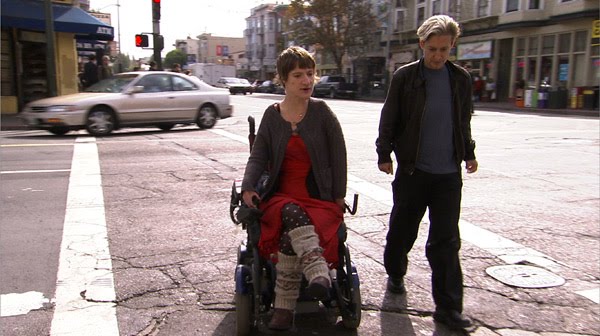
When viewing a Mike Leigh film you typically expect to see a slice of life portrayal of contemporary England. The focus will on the ins and outs of daily life for working class people. However, with this picture, Leigh creates an abrasive, violent, surreal universe which does adhere to the tenets of his standard films: there are no big illuminating answers or moments.
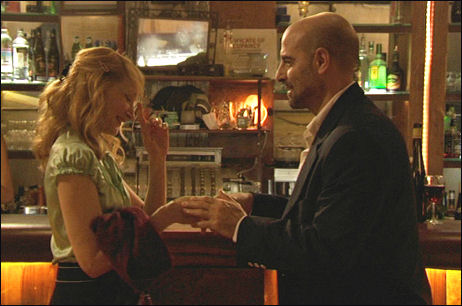
We first see Johnny (Thewlis), the film’s protagonist, in the middle of raping a woman in an alleyway. Hardly a way to endear us the character we’ll be following through the rest of the movie. The woman runs away saying she’s going to get brothers and they will beat Johnny to death. Johnny runs home, grabs a few things, steals a car and heads to London where he imposes himself on old flame Sophie (Sharp). Johnny gets involved with Sophie’s flatmate (Cartlidge), leaves in a huff and encounters a series of strange characters living and working in London. Johnny is paralleled by Jeremy (Crutwell) an utter misogynist and sociopath that gives Patrick Bateman a run for his money.
Director Leigh seems to be using Naked as sandbox in which to play with the audience’s expectations of their characters and the flow of plot in film. There is a palpable trajectory to the film for its first 30 minutes, and then suddenly it veers off into an episodic series of encounters between Johnny and other random characters. The introduction of Jeremy is intentionally confusing and appears to have no bearing on the overall plot of the film. Jeremy’s abusive exploits don’t feature any characters from Johnny’s portion of the film and seem as if they were cut in from another film. When the two plots cross into each other in the last 40 minutes of the film there is no explosive conflict or release of tension.
Naked could easily be seen as an extremely misogynistic film, but that would be selling short. Yes, women are brutalized numerous times throughout the film, Jeremy himself rapes about three women. However, I think Leigh is testing us to see what we will accept from characters in a film. What is the line they cross that makes them intolerable for us? In addition, every single characters is away from home: Johnny is on the run, Sophie is sub-leasing, her friend Sandra (Skinner) is off traveling through Zimbabwe. The moment the film finds its resolution is when all the characters have assembled in Sandra’s flat after she has returned home. It’s in this moment the genre of the film becomes rapid fire and even more absurd. There are elements of farce, romance, drama, and in the end it all falls apart. Johnny ends up even more broken than he had been at the start and where is going is now unknown and inevitably even further into the gutter.

Newbie Wednesday – Mammoth


Mammoth (2009, dir. Lukas Moodysson)

Starring Gael Garcia Bernal, Michelle Williams, Marife Necesito, Sophie Nyweide, Nathhamonkarn Srinkikornchot
We are constantly alone, even when we’re with the ones we love. And when the decision comes to be away for money, we seem to choose to be away even if it makes us miserable. Swedish director Lukas Moodysson examines these ideas in a very well-acted, but ultimately cold and derivative film. The strongest influences here are the work of Alejandro Innaritu (Babel, Amore Perros) and the 2005 film Crash.
The picture begins with the happy family at play: Leo (Bernal) is a video game designer, Ellen (Williams) is an emergency room doctor specializing in pediatrics, and their daughter, Jackie (Nyweide) is a precocious child caught up in her love of astronomy. Also in their lives is Gloria (Necesito), a live in cook/maid/nanny whom Jackie seems much closer to. Leo leaves for a long business trip in Thailand and Ellen becomes caught up in the tragedy of a stab wound victim brought to her and jealousy of Gloria and her daughter. Gloria is dealing with anxiety of being separated from her own sons back in the Philippines.
Moodysson’s outlook on the world is a bit too simple and feels very predictable. Ellen’s jealousy over Gloria could be seen from the opening frames of the film, and doesn’t really develop in relevant way. The situation with Gloria’s children also comes to a close on a very unsure note, and not in a thought-provokingly ambiguous way, but rather uninspired. The film also makes some bland cross cutting: a pile of elephant dung is followed by Gloria cleaning toilets. These scenes feel more proud of how clever they are than really possessing any real cleverness.
The problem with not creating any sort of metaphors between his ideas and his characters, causes Moodysson to end up moralizing to us in the most patronizing of ways. Much like Crash, a horrific example of patronizing and pretentious cinema, Mammoth slaps us over the head with its message multiple times and then with a barrage in the final scenes. At the end of the day though, the question arises “What is the point?” Yes, I think everyone is aware of the global disparity of wealth and power. The film provides no ideas as to where we go next, which makes it makes of little value.