
Author’s Note: I include Action Comics and Detective Comics because their creative teams did not directly work on last week’s Superman and Batman Rebirth issues. I won’t be following those titles here on the blog, but may read their full storylines and review them at a later date. So for now, just a quick look at how they are starting their Rebirth storylines.
Action Comics #957 (Writer: Dan Jurgens Artist: Patrick Zircher)
Might be my second favorite of this week but also the one I feel the most trepidation.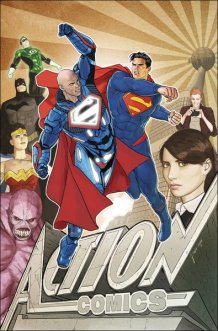
Returning for the tenth time or so to write Superman is Dan Jurgens, most famous for penning the now classic Death and Return of Superman storyline. The pace of the comic is just right, lots of stuff happens and many plots are set up. This feels the most like classic DC in the Rebirth roll out. The big plot points are Luthor taking up the mantle of Superman, using his time with Justice League as leverage, and Pre-New52 Superman finally making his debut in costume. I am very interested in finding out where this story will go but am praying this isn’t going to be another hard reset to status quo in a year’s time. We’ve seen Luthor in this role not to long ago (Paul Cornell’s run on Action kept coming back to me as I read) so I want to see something familiar but with fresh new direction.
Aquaman Rebirth (Writer: Dan Abnett Artist: Scot Eaton, Oscar Jimenez, Mark Morales and Gabe Eltaeb)
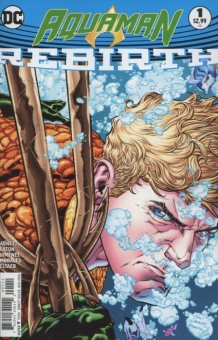 I felt like I was in familiar territory because this issue seems to tread the same notes most modern Aquaman stories always do: Hey, he’s a super serious hero, you guys! This need to make meta-commentary on jokes about Aquaman does more to diminish the character than just telling good stories about him. This comic also didn’t seem very open to new readership with some elements, like the Deluge, not being defined well or the reveal of the villain at the end feeling awkward. At the end, I felt like it was all set up for Aquaman to just fight one of his old villains again, but not the sense that something new was going to happen. Probably my least favorite of this week’s releases.
Detective Comics #934 (Writer: James T Tynion IV Artist: Eber Ferreira, Eddy Barrows)
If this series had to get a new title it would be Batman Family. The conceit of Detective 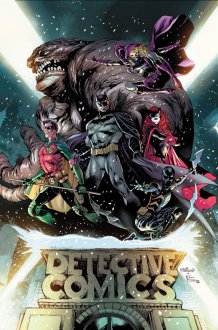 appears to be a focus on a team of Bat-related characters. Featured in the series will be Batman, Batwoman, Red Robin, Spoiler, Orphan, and Clayface. Clayface is the interesting outlier, a character shaped more by his appearances in the 90s animated series, than much of anything in the comics. His role in the team hasn’t been revealed yet but Tynion does a good job of making him sympathetic right from his first moment in the film. I used to truly hate the work of artist Eddy Barrows but he has made some significant improvements. Action feels fluid and energetic and the world is full of detail. There’s a slot of story potential for the interaction and relationships between these characters and this will be one I continue following.
The Flash Rebirth (Writer: Joshua Williamson Artist: Carmine di Giandomenico)
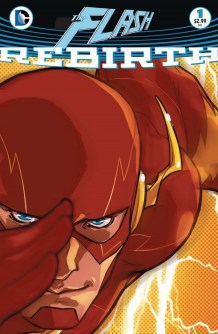 It can be argued that DC Rebirth #1 was a Flash-centric story, with its lost Wally West at the heart of it all. The Flash Rebirth is an interesting artifact in that it takes place before, during, and after the events of DC Rebirth. Right away Williamson is making the title new reader friendly by using a contemporary murder scene to recap Barry Allen’s own loss of his mother. It would be easy to just make the comic a facsimile of the popular tv show but effort is put into referencing those important elements but keeping the comic its own. There are a couple beats that take us out of the story, the Barry/Wally reunion retold and Barry’s visit to Batman who happens to be analyzing that familiar smiley face pin. Artist di Giandomenico was someone I didn’t care for much on the recent X-Factor title for Marvel, but here his style lends itself to the spend and energy of the Flash. While not a singularly cohesive story, Flash Rebirth is a good introduction to the character.
Wonder Woman Rebirth (Writer: Greg Rucka Artist: Liam Sharp, Paulo Siqueira)
The award for most meta Rebirth comic this week goes to Wonder Woman. From page one,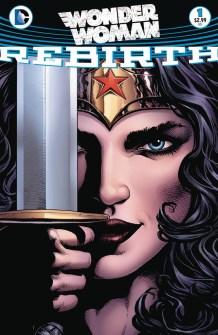 Greg Rucka is bringing up the contradictions and fluctuations in this character’s past. Rucka’s past work on the title also dealt with finding a unique place for Princess Diana in a world of supermen. And he did a great job at it, playing up her role as a warrior and an ambassador to the world of men. Right away Rucka is saying we are going to examine this character again and redefine her. Another thing I loved was the use of multiple artists. Often new artists pop up in a jarring non-essential way, but here we switch to a new artist the moment Diana dons her new costume. If you really want a comic that is beckoning you in for a new story,but with recognition of the history that has come before, this is it. You also have a great pedigree with Greg Rucka at the helm. The ongoing series will be doing something a bit odd, alternating issues between the present day story and a Year One origin reboot. Definitely on my list to follow. Hands down the best release of the week.
Next Week: I will be at Origins most of the week so I’ll be reviewing weeks 4 & 5 together in two. Titles will be Batman #1, Green Arrow #1, Green Lanterns #1, Superman #1, Titans Rebirth, Flash #1, Aquaman #1, and Wonder Woman #1


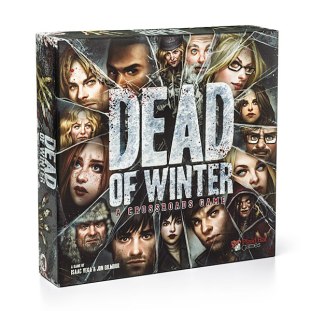 Dead of Winter is a board game from Plaid Hat Games, designed by Jon Gilmour and Isaac Vega. There are a lot of board and card games on the market in the zombie genre, so seeing yet another one might be a turn off. However, Dead of Winter brings some incredibly fresh and interesting elements to the table.
 We’ve played Dead of Winter twice, once as a two player game and most recently with three players. My wife and I invited over a coworker, Tiffany, who is a big fan of zombie media, particularly The Walking Dead. Dead of Winter does a great job in recreating that group tension from shows like TWD. For our game, we used the recommended Main Objective of collecting sample from zombies to develop a cure. The first round of play was everyone getting used to their choices of actions and we managed to stave off the first crisis. What I enjoyed most was that almost every Crossroads card pulled came into play which created a lot more dramatic tension. I remember one of the my characters stumbled across an abandoned oil truck which would have brought a cache of Fuel into the colony (used to make multiple moves around the board during a turn). The catch was that the noise from the truck would bring half a dozen zombies to the outskirts of the colony, putting us on the verge of being Overrun. If a location is Overrun, the character with the lowest Influence is automatically killed, no way to avoid it. I decided against taking the tanker and a few turns later we had a Crisis that needed Fuel to stop it. Those sorts of moments make the game very re-playable because consequences for decisions always have an interesting way of coming back to haunt you.
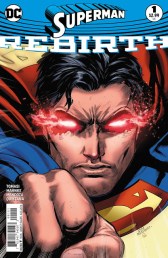 Of the four titles, this felt the least like the beginning of something new, or the reintroduction of some element from DC Comics past. The story focuses on the Pre-New 52 Superman and Lana Lang unearthing the recently deceased Superman’s ashes. Lana made a promise that if he died before her, she would make sure his remains were with his adopted parents, The Kents, in Smallville. The two characters talk about old Superman’s experience with death and rebirth, and he’s pretty insistent this world’s Superman is going to be reborn eventually. It comes across a little meta-contextual about the silly nature of death and rebirth in comics.
 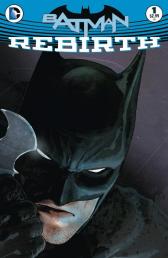 This was much more interesting and fresh than Superman: Rebirth. Tom King is able to reinvigorate some elements of the Batman mythos. The most stark change is to Calendar Man, a jokey gimmick whose crimes revolved around the seasons or holidays. Now Calendar Man is like Cronenberg body horror, his body shedding its entire skin seasonally. The best Batman villains are ones that unsettle us. With the whole Batman concept being so deeply embedded in human psychology, having horrors that poke around and disturb our minds is when the series shines.
 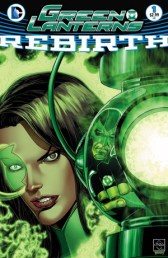 What this issue has going for it are two very underdeveloped characters. Simon Baz was introduced in 2012 but fell off into obscurity after a year. Jessica Cruz was introduced a year ago as Power Ring, the host to an otherworldly evil. In last week’s Justice League #50, she shook off her possession and was rewarded with Green Lantern ring. The two leads are used to emphasize the GLs as space cops, with a very reluctant and combative partnership.
 Of the four Rebirth one-shots, this one felt like the best blend of a fresh style of writing while incorporating classic DC elements. The classic element is front in center in the form of a rekindling of the relationship between Green Arrow and Black Canary. There’s fun banter back and forth between these two and that makes the book. It’s also a done in one story, while the other Rebirth titles are just setting up their core titles.


 PopCult Reviews