The Sheriff of Babylon Volume 1: Bang, Bang, Bang
By Tom King and Mitch Gerads
Purchase the book here!
 Florida cop Christopher Henry has a new job training the law enforcement forces in Baghdad. It’s 2003, and he is in the heart of the Iraq War. There is the standard level of chaos and violence in the city but things get personal when one of Henry’s Iraqi trainees is found murdered. Henry teams up with Nassir, an ex-cop still hanging on in the city. In the background is Sofia, an Iraqi-American who has come back to the city to help with the rebuilding process while attempting to take control of the organized criminal underbelly. This is the tv series HBO wishes it had the budget to make.
The Iraqi Occupation has been the topic of numerous films and documentaries, but Sheriff of Babylon is clever in its genre-mashing, bringing the detective noir into play. And it works better than you might expect. The instability in Iraq has blurred the lines of authority and no one can be trusted, not even if they do wear a nice shiny uniform. Between the various sub-groups with the American military, privately contracted forces, insurgents, politicians jockeying for power, and a myriad of other factions Baghdad is an incredibly confusing and scary place.
If you are a regular reader of this blog then you know I love Tom King’s work. I’ve previously read his run on DC Comics’ Omega Men and am still enjoying his work on Marvel’s The Vision. This was the first work I’ve read of his that wasn’t within in the superhero genre, though those previously mentioned titles aren’t superhero stories in the traditional sense. King was an intern under writer Chris Claremont for many years before joining up with the CIA in the wake of 9/11. He worked for seven years in counterterrorism which is very apparent in the detailed storytelling present in Sheriff. The series is written with a level of knowledgeability that doesn’t get too jargon-filled and is still comprehensible to a civilian. The story perfectly hits the notes a good noir should, especially on the protagonists increasing confusion as he navigates the labyrinth. There’s also great moments where we see the effort towards good turned to a pretty hopeless def eat, as all noir needs to have.
The artwork is exceptionally well done. It’s very photo-realistic with human expression and faces, but with a gritty abstraction in the right moments. In an interview, artist Mitch Gerads explained that a fan who is also a veteran of the war said the book captured the feel of the environment in its colors. Everything is colored in earth tones and primary colors only appear when something needs to pop out of the landscape around it. The uniformity of color also perpetuates a sense of confusion because military people purposefully become hard to differentiate.
The Sheriff of Babylon is a 12 issues mini-series so this volume is just the first half of the story. I enjoyed it quite a bit and reminds me of a really quality cable drama. No character is ever a stereotype and layers are revealed over time and at key moments in the plot. If you’re seeking out a modern war comic, something dealing with the more complex and gray areas, this series has a lot to offer.


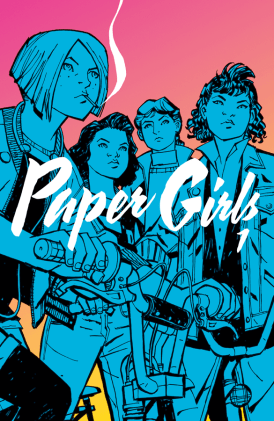 I had no idea what Paper Girls was, not even who wrote or drew it. I just saw the cover and thought that looks interesting. To my joyous surprise, I learned it was written by Brian K. Vaughan (Saga, Y the Last Man, Lost) and illustrated by Cliff Chiang (Wonder Woman, Tales of the Unexpected). I also had wondered what the title meant by “Paper Girls” and found it was so clear I should have figured it out: They are girls who deliver papers.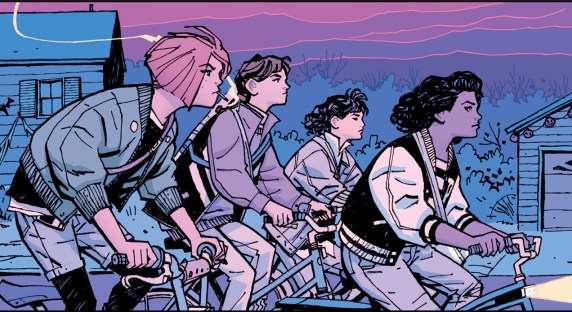
 I became a lover of Jorge Luis Borges’ writing in college. If you’re not familiar, he was an Argentinian writer who trafficked mostly in short stories that evoked magic realism and played with the ideas of authorship, fiction, and meta-reality. Brockmeier doesn’t get as deeply academic as Borges would, but still touches upon the same ideas. The Truth About Celia begins with the mysterious disappearance of the title character, the daughter of science fiction author Christopher Brooks. The book’s structure is that of a collection of short stories written in the seven years since she vanished that revolve around that tragedy. Some are directly about Celia other opt to explore more fantastical spaces.
  I picked this novel off the shelf at a bookstore my sophomore year of college knowing absolutely nothing about it. Over a decade and a dozen books later I consider Japanese author Haruki Murakami one of our greatest living writers. Murakami is unlike anyone else you will ever read and has always felt more like film than literature. He’s about setting a mood and examining characters in their spaces. He’s about hinting at mystery and fantasy but never letting the lens explore it too closely.
 I was in the dorms the summer between my sophomore and junior year when I read this novel. I was blown away. It was my first encounter with Cormac McCarthy and I knew I had read one of the great American works of literature. Surprisingly, this is a variation on the story of Davy Crockett. That is never clear but if you are familiar with some of the tropes you begin to see them underneath the surface. The story follows a character known only as The Kid born under mysterious signs who encounter a powerful figure known as Judge Holden. Holden becomes a recurring figure throughout the novel and might possibly the Devil. The Kid ends up working to help expand America into the west by exterminating Apaches. The landscape becomes a surreal nightmare plane seen through the eyes of the Kid. Blood Meridian is one of those pieces of literature that you must imagine nearly killed the author to write. It is supremely intense, violent, and sprawling. It outright spits in the face of the romantic Western genre by making us seeing the horrible brutality and biblical horror of a lost time.
 While I really don’t enjoy found footage horror films, when the genre is applied to literature or, in this case, audio drama, it works much better in my opinion. The premise of Tanis is that journalist Nic Silver is attempting to uncover what Tanis, a word mentioned in a myriad of sources, is. Is it a person, a place? Why are famous occultists obsessed with it? How does it connect to other urban legends and modern horrors? If you are a fan of slow burning, very creepy, conspiracy theory stories Tanis will provide you with many hours of entertainment. Currently, Season 1 (12 episodes) is available with Season 2 on its seventh of 12 total episodes.
 This was the first movie podcast I ever listened to starting way back in 2005. At the time it was Adam and Sam Van Hallgren hosting, but the latter has moved on to a producing role. No matter the hosts, the film has always maintained a high level of discussion about film. Kempenaar is an instructor at the University of Chicago and Larsen spent over a decade reviewing films for the Chicago Sun-Times. Both men have a very deep knowledge of film and work to spotlight picture beyond what has currently opened at the cineplex. This podcast has probably been the biggest inspiration to my love of film introducing me to filmmakers like Wim Wenders, John Cassavetes, and Robert Altman. Even if you have an extensive film knowledge you will learn something from listening to this series.
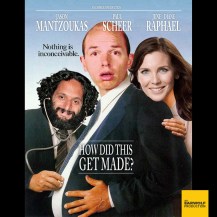 Inspired by Mystery Science Theater 3000 and a plethora of books detailing the “worst films ever made” these three comedians and actors set out to make a series where they explored travesties of cinema in depth. Episode One spotlighted Burlesque; Christina Aguilera and Cher’s gaudy passion project. From there they have looked at films like The Last Airbender, Masters of the Universe, and Zardoz. Some particular highlights have been A View to a Kill, Glitter, and the god awful sequel to Saturday Night Fever, Staying Alive. A very high energy podcast that has very charismatic and witty hosts that make watching bad films a pleasure.
 Lauren Lapkus had become a staple on Comedy Bang Bang thanks to her variety of characters. When she decided to start her own podcast instead of hosting she opted to make the host rotating and to play a different character on each episode. This lets the guest come up with the concept of the show, the topic of conversation and even the basics of Lapkus’ own character. In fact, Lapkus doesn’t know any of this information until they start recording the episode and loves being made to improvise it all on the spot. A nice surprising podcast that never fails to present something unique and funny.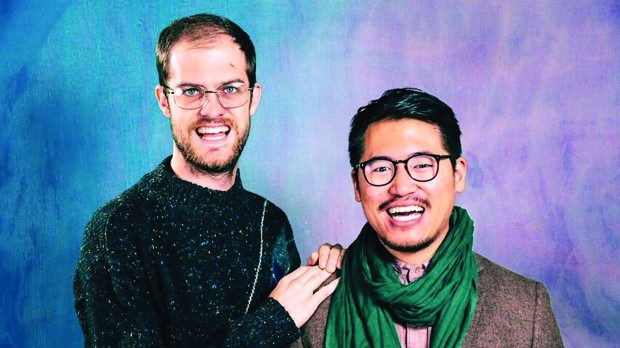
 Views and Visitors